
What a Contact Center Case Study Reveals About Modern Customer Service
A contact center case study is one of the fastest ways to see what actually works — and what doesn’t — when businesses try to improve how they handle customer calls, chats, and messages.
Here’s a quick look at what the best case studies consistently show:
| What Changed | What It Achieved |
|---|---|
| Workforce management & forecasting | 20% improvement in service levels |
| Callback technology replacing hold times | 30+ million minutes of queue time removed |
| Cloud migration & omnichannel routing | 70% reduction in call abandonment |
| AI-powered Agent Assist | 30-second drop in average handle time |
| IVR self-service implementation | $50,000+ in annual savings |
| VoIP system upgrades | 25%+ reduction in phone bills |
The pattern is clear: companies that modernize their contact center technology see real, measurable results — faster response times, lower codes, and happier customers.
But knowing where to start is the hard part. Most businesses are stuck juggling multiple vendors, outdated phone systems, and disconnected tools that make it nearly impossible to get a clear picture of what’s happening on the floor.
I’m Patrick Brangan, and with over 20 years of experience in unified communications and business technology — including hands-on work with contact center case study implementations for SMBs across Dallas, Tampa, and Orlando — I’ve seen how the right technology stack transforms customer service operations. Let’s walk through the success stories that prove it.
Why Every Business Needs a Contact Center Case Study Strategy
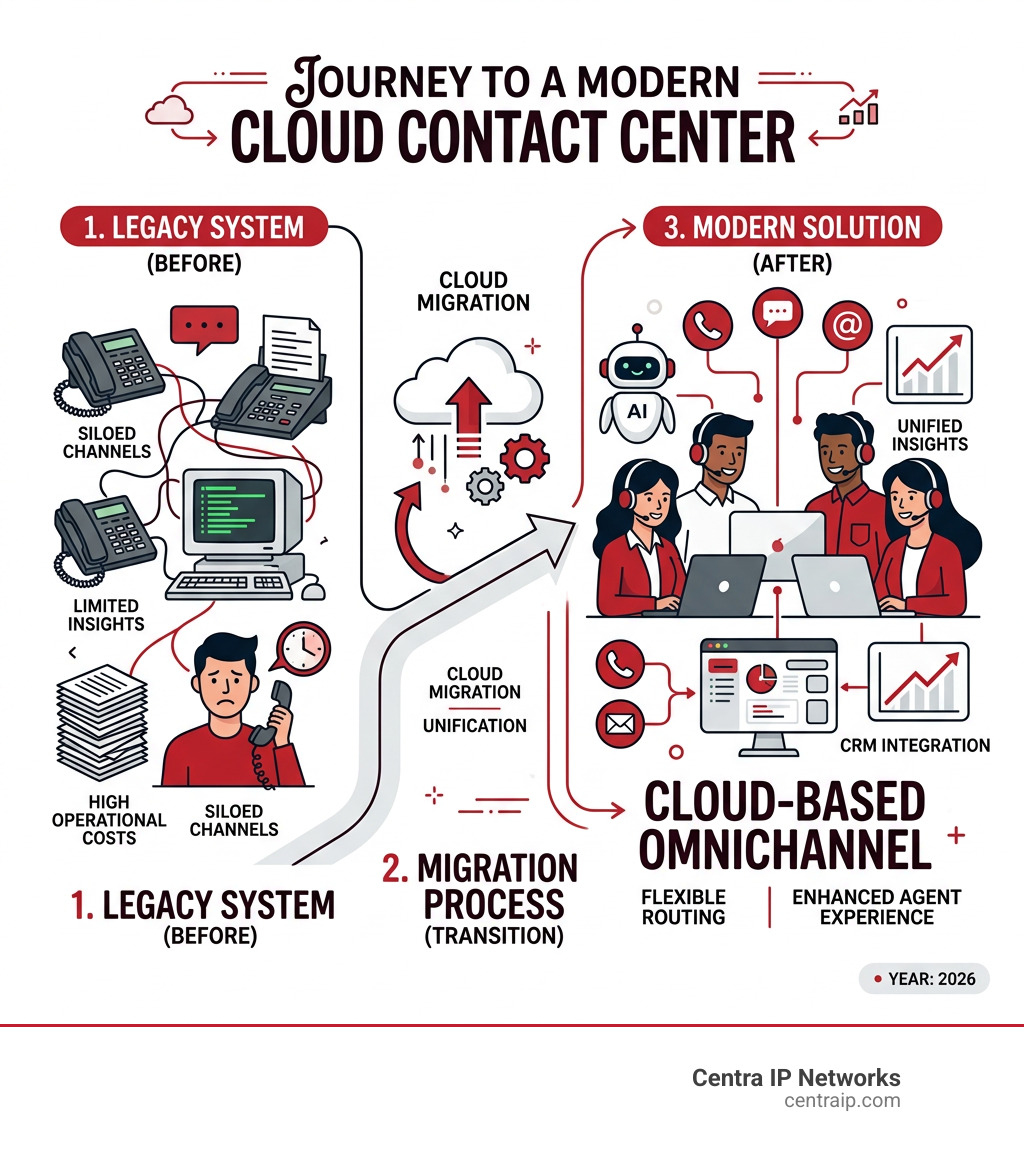
When we look at the common threads in every successful contact center case study, a recurring theme emerges: the “Frankenstein” tech stack. Many businesses in markets like Dallas and Fort Worth start with fragmented systems—one tool for voice, another for chat, and a completely separate spreadsheet for scheduling. This creates siloed channels where data doesn’t flow, leading to manual scheduling headaches and frustrated agents.
Implementing a cloud-based call center isn’t just about moving your phones to the internet; it’s about unification. By utilizing crm integration, businesses can finally pair historical data with real-time interactions. This allows for accurate call volume forecasting, ensuring you aren’t paying for idle agents during slow hours or drowning in calls during peaks.

A prime example of this transformation can be seen in how global leaders modernize. You can Read the full Microsoft case study here to see how a major tech brand unified fragmented platforms and manual data searches into a single, AI-powered interface. They moved from “guessing” to “knowing,” which is the foundation of any successful strategy.
Analyzing a High-Volume Contact Center Case Study
High-volume environments face a unique demon: the “waiting room” effect. In a notable Mindful Case Study: U-Haul, the challenge was massive. With over 17.8 million calls per year, hold times weren’t just a nuisance; they were a brand-killer. When agents answered, they were often met with “customer venting”—minutes of frustration from callers who hated the hold music and the wait.
By implementing Mindful Callback and advanced voice features, they achieved staggering results:
- 30+ million minutes of queue time removed (that’s 57 years of human life saved from hold music).
- $453,000 in estimated toll fee savings.
- 15% increase in service levels.
The lesson here? Giving customers their time back through “Second Chance Callbacks” (offering a callback even after they initially declined) can boost acceptance rates to 90%, transforming the start of the call from a conversation into a conversation.
Scaling Growth: A Healthcare Contact Center Case Study
In the healthcare sector, particularly for busy practices in Tampa and St. Petersburg, missing a call isn’t just a lost lead—it’s a patient who isn’t getting care. We’ve seen how an Orthopaedic Medical Group outgrew their legacy business phone systems and lost the ability to track missed calls.
By transitioning to a system with advanced call statistics and queue callbacks, they were able to manage between 2,100 and 3,100 daily patient calls. The results were life-changing for the business:
- $1.5 million revenue growth in a single year.
- Virtual dashboards allowed managers to see call spikes in real-time.
- Voicemail-to-email transcription ensured no patient request fell through the cracks.
This contact center case study proves that when you improve the “plumbing” of your communications, you create the capacity for massive business expansion.
5 Transformative Success Stories in Customer Service
Success in the modern era requires more than just answering the phone; it requires being where the customer is. Whether it’s through microsoft teams integration for internal collaboration or cloud-based phone systems that allow for remote work, the goal is a seamless omnichannel experience.
One powerful example is how TruConnect Leverages AI to Reduce Costs and Optimize Customer Service. By implementing AI-driven Agent Assist, they reduced average handle time by 30 seconds and saved 7.5% in operational costs within the first year. This wasn’t just about speed; it was about giving agents the tools to be more engaged and productive while working remotely.
Lessons from a Global Retail Contact Center Case Study
Retailers like Vera Bradley have shown us that the “voice-only” era is ending. Their data revealed a shift: voice channel usage dropped from nearly 80% down to 34% as customers flocked to chat and SMS. By embracing a digital-first omnichannel strategy with NICE CXone, they achieved:
- $1 million annual savings through schedule optimization (cutting 23.5 operating hours per week).
- 70% reduction in call abandonment rates.
- PCI compliance for secure remote work, which is essential for any business handling credit card data.
They also leveraged cloud-based call recording to maintain quality standards and used IVR self-service to save an additional $50,000 annually.
The ROI of an AI-Driven Contact Center Case Study
For a giant like Sony Electronics, the challenge was misrouted calls. Customers calling about a camera might end up in the PlayStation queue. By using Enlighten AI to analyze 60,000 interactions, they identified that 40% of inquiries were candidates for automation.
According to the Sony Case Study, implementing a virtual agent and improved agent workflows led to:
- 34.8% increase in SMS customer satisfaction.
- 15.9% process containment (customers resolving issues without a live agent).
- 22.5x increase in feedback response rates for chat customers.
This demonstrates that AI isn’t here to replace humans; it’s here to route them more intelligently and handle the “easy” stuff so humans can focus on complex problem-solving.
Measurable Impacts: By the Numbers
If you are looking for the “bottom line” of a contact center case study, these statistics provide the clearest picture. In our experience across Florida and Texas, these numbers are achievable when you move away from legacy hardware.
| Metric | Pre-Implementation | Post-Implementation | Improvement |
|---|---|---|---|
| Average Service Level | 71% | 86% | +20% |
| Call Abandonment Rate | High/Unstable | 70% Reduction | Significant Stability |
| Annual Operating Costs | Baseline | $1,000,000 Savings | High ROI |
| Average Handle Time (AHT) | Baseline | 30 Seconds Lower | Faster Resolution |
| Monthly Phone Bill | 100% | 75% | 25% Reduction |
For many of our clients, the 25% bill reduction often seen when modernizing communications is a major catalyst for change. When you realize you can have better technology for less money than your old landlines, the decision becomes a no-brainer.
Key Technologies Driving Modern Success
What makes these success stories possible? It’s a combination of smart software and proven methodologies like Lean Six Sigma to remove process waste.
- Workforce Management (WFM): Dynamic forecasting models that look at historical patterns and upcoming promotions to ensure you aren’t overstaffed (wasting money) or understaffed (frustrating customers).
- AI & Copilot: Tools like Microsoft Copilot and Agent Assist provide real-time suggestions to agents, effectively acting as a digital coach during live calls.
- Cloud Integration: Platforms like Amazon Connect and Salesforce integration allow for a “single pane of glass” where an agent can see a customer’s entire history the moment the phone rings.
- Interaction Analytics: Using AI to “listen” to 100% of calls to find trends, rather than manually reviewing a random 2% of recordings.
As seen in the case of Transforming student communications with AWS, modernizing with Amazon Connect allowed Dallas College to handle complex student inquiries with much greater agility than their old on-premise system ever could.
Frequently Asked Questions about Contact Center Case Studies
What are the most common challenges identified in these case studies?
The most frequent “villains” in these stories are fragmented platforms and data silos. When an agent has to flip between five different windows to find a customer’s order number, response times suffer. Other common issues include a lack of supervisor visibility (not knowing who is on a call right now) and high labor costs driven by inefficient scheduling.
How does AI specifically improve contact center performance?
AI acts as a force multiplier. It reduces Average Handle Time (AHT) by summarizing calls automatically and providing “next best action” suggestions to agents. It also identifies automation opportunities—spotting routine questions that could be handled by a chatbot—and enables 24/7 self-service so customers can get answers at 2:00 AM without needing a live staff member.
What role does workforce management play in service level improvements?
Workforce management is the art of “right person, right place, right time.” By using dynamic forecasting, businesses can align agent skills with specific call types. This prevents overstaffing (which leads to high idle time) and optimizes operating hours. In one case, simply refining the schedule saved a company $1 million a year by cutting just 23.5 unnecessary operating hours per week.
Conclusion
The evidence from every contact center case study we’ve analyzed points to a single conclusion: the “old way” of handling customer communications is a liability. Whether you are a medical group in Tampa trying to reduce missed calls or a retail business in Dallas looking to slash your phone bill, the technology exists to make your operation faster, cheaper, and more effective.
At Centra IP Networks, we specialize in making this transition simple. We offer a comprehensive contact center solution that brings your phone systems, internet, and cloud tools onto one platform. With a single provider and a single bill, you get the benefit of our 35+ partnerships and 20 years of expertise to build a cost-effective solution tailored to your needs.
Don’t let your customers stay on hold any longer. Let’s write your success story together.