
Why Contact Center VoIP Solutions Are Replacing Traditional Phone Systems
Contact center VoIP solutions are the fastest-growing alternative to legacy landline systems for businesses that need to handle high call volumes, support remote agents, and deliver better customer experiences — all without overpaying for outdated hardware.
Here is a quick comparison to help you decide if a VoIP contact center is right for your business:
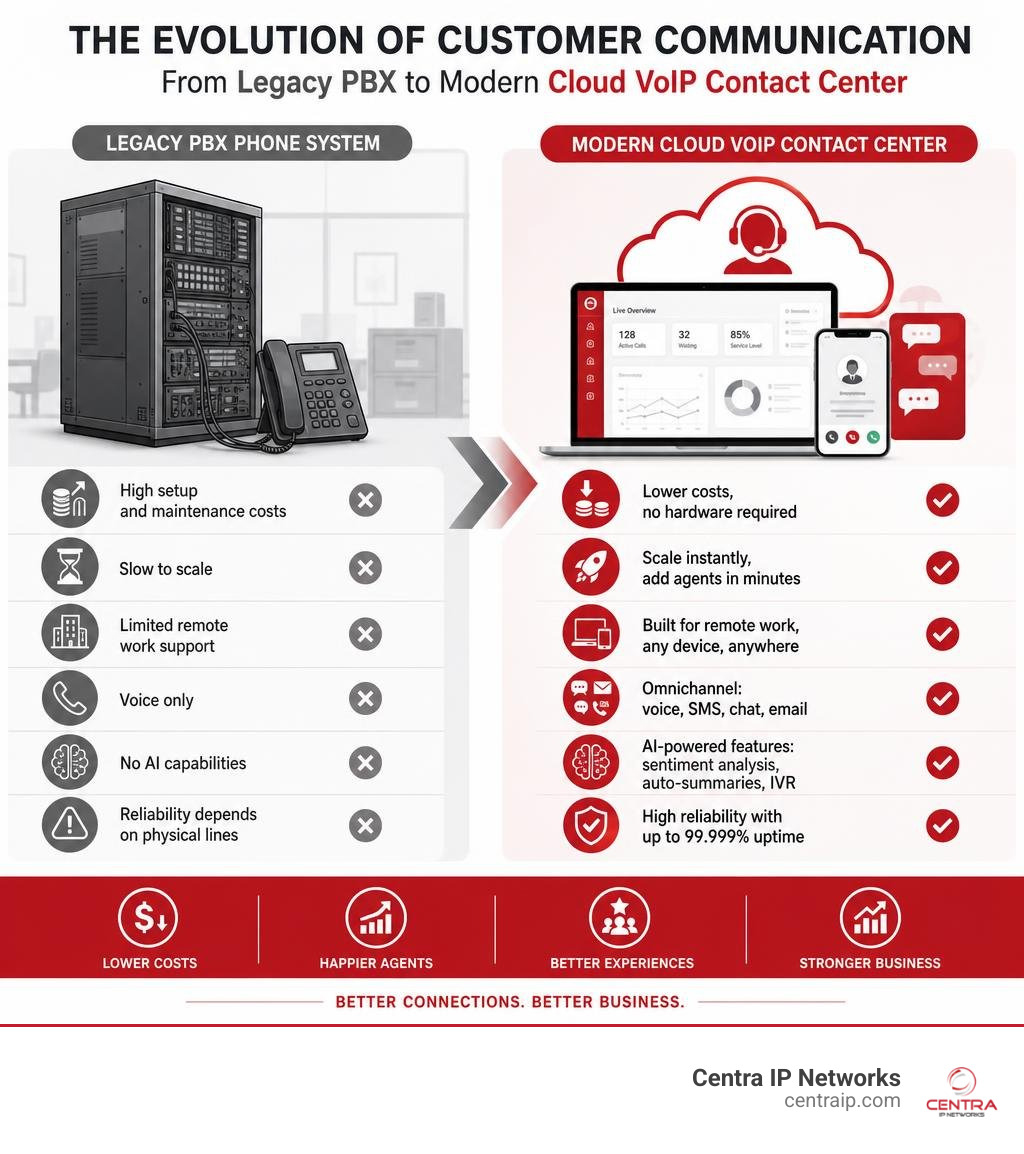
| Factor | Traditional PBX / PSTN | Cloud VoIP Contact Center |
|---|---|---|
| Setup cost | High (hardware + installation) | Low (software only, no upfront hardware) |
| Scalability | Slow, requires physical changes | Instant, add agents in minutes |
| Remote work support | Limited or impossible | Built-in, works from any device |
| Monthly cost per agent | High fixed line costs | $15–$150/agent/month depending on tier |
| Omnichannel (SMS, chat, email) | No | Yes |
| AI features | None | Sentiment analysis, auto-summaries, IVR |
| Uptime reliability | Depends on physical lines | Up to 99.999% SLA (Nextiva, 8×8, Dialpad) |
| Cost savings vs. landlines | Baseline | Up to 40% savings on local calls |
The shift from copper phone lines to internet-based voice technology has fundamentally changed how businesses serve customers. Traditional systems tied companies to expensive on-site equipment, certified installers, and rigid capacity limits. Modern VoIP platforms run entirely over the internet — giving teams the flexibility to scale up during peak seasons, support agents working from home, and unify voice, chat, and SMS into a single platform.
The result? Lower costs, faster response times, and customer experiences that actually build loyalty.
I’m Patrick Brangan, and with over 20 years of experience in business technology sales — specializing in unified communications for SMBs across Dallas, Tampa, and Orlando — I’ve helped hundreds of companies evaluate and implement contact center VoIP solutions that fit their size, budget, and growth goals. In this guide, I’ll walk you through everything you need to know to make a confident decision.
Simple contact center voip solutions glossary:
Understanding VoIP Telephony and Contact Center Evolution
To appreciate where modern communication tools are today, we first have to look at where we came from. For decades, traditional call management relied entirely on the Public Switched Telephone Network (PSTN). These traditional copper wire networks were dependable in their time, but they were also rigid, expensive to maintain, and completely tied to physical locations.
As businesses grew across regions like Dallas, Fort Worth, Tampa, and Orlando, legacy phone equipment quickly became a bottleneck. Moving to Voice over Internet Protocol (VoIP) changed everything. VoIP converts human audio into binary data packets (ones and zeros) that travel across standard internet protocols rather than physical PSTN lines.
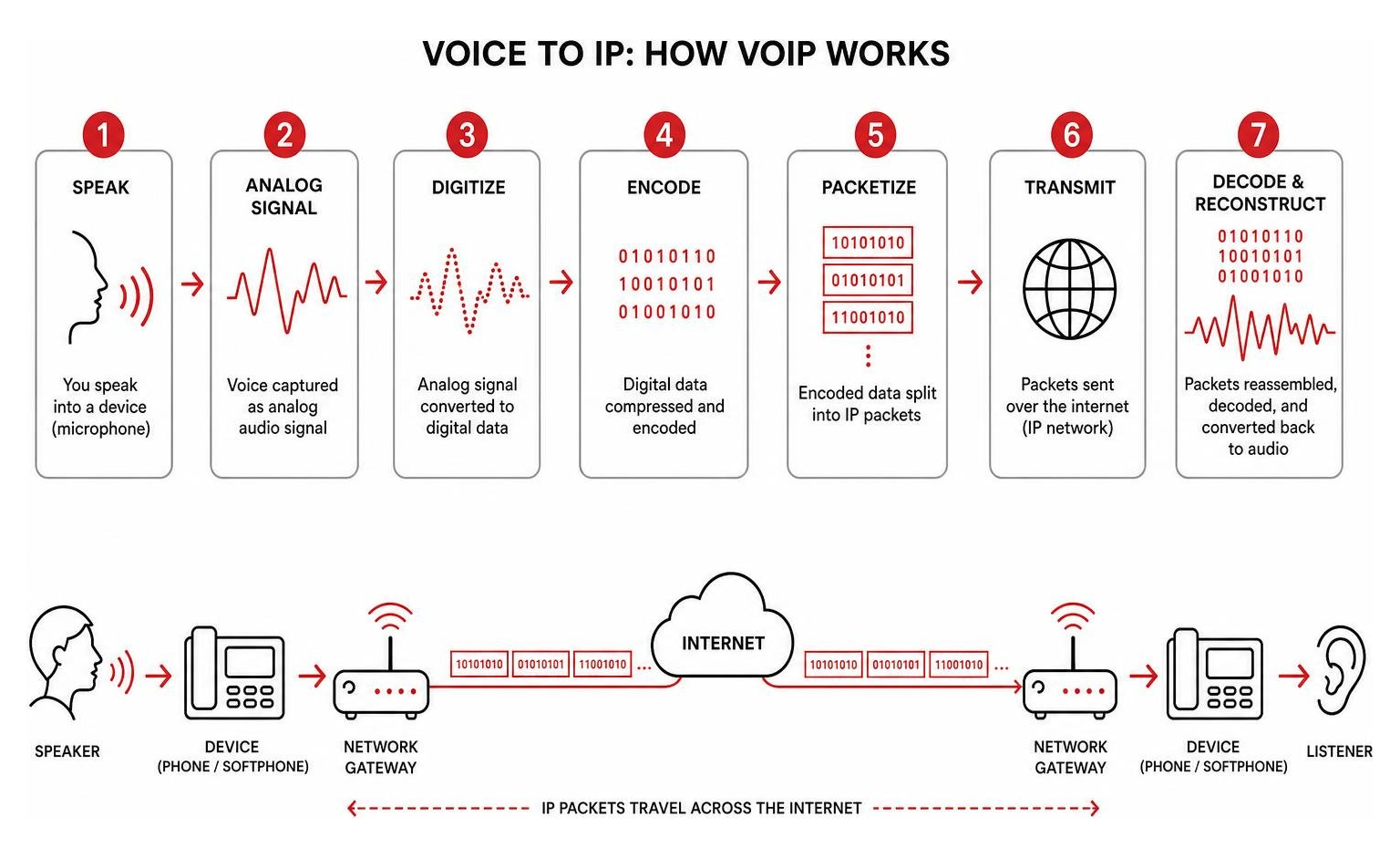
By migrating away from physical trunks toward digital SIP trunking, companies can run high-density voice traffic over existing broadband connections. To get a complete understanding of how endpoint devices handle this technology, take a look at our detailed breakdown on What is a VoIP Phone. Modern support teams no longer need bulky desk sets; instead, software applications known as softphones run on laptops, desktops, and mobile devices, allowing agents to manage phone calls securely from anywhere with an internet connection.
Call Center vs Contact Center: Key Operational Differences
While people often use the terms interchangeably, there is a fundamental operational difference between a traditional call center and a modern contact center.
A call center focuses exclusively on handling inbound and outbound voice calls. It utilizes phone lines to manage voice queues, route incoming calls to available agents, and conduct outbound phone operations.
In contrast, a contact center provides an omnichannel communication experience. While voice remains a primary interaction channel, a contact center seamlessly unifies multiple digital channels into a single interface:
- Voice communications: Inbound queuing, smart transfers, and outbound dialing.
- SMS & Business Messaging: Text messaging for immediate updates, alerts, and customer inquiries.
- Web Chat & Chatbots: Live online chat combined with automated self-service routing.
- Email & Social Messaging: Centralized ticketing for digital inquiries.
To learn more about structuring multi-channel customer operations, read our In-Depth Guide to Contact Center Solutions.
How Session Initiation Protocol Drives Voice Traffic
At the heart of every VoIP conversation is Session Initiation Protocol (SIP). SIP is the open IP standard responsible for establishing, maintaining, and terminating real-time communication sessions over the internet, including voice, video, and messaging.
When a caller dials your business, SIP signals the system to establish a session between the caller and your contact center platform. Voice signals are encoded into data packets using standardized audio codecs like G.711 (uncompressed HD audio) or G.729 (compressed for bandwidth efficiency).
Additionally, WebRTC (Web Real-Time Communication) integration allows agents to answer calls directly inside modern web browsers without installing dedicated software. Proper network bandwidth allocation ensures these voice packets take priority over standard internet browsing, preventing dropped calls or audio degradation.
The Strategic Advantage of Contact Center VoIP Solutions
Switching to contact center voip solutions isn’t just a technical upgrade; it’s a strategic move that affects your operational efficiency and bottom line. In fact, research shows that U.S. businesses saved up to 40% on local calls by replacing traditional PSTN lines with VoIP phone services.
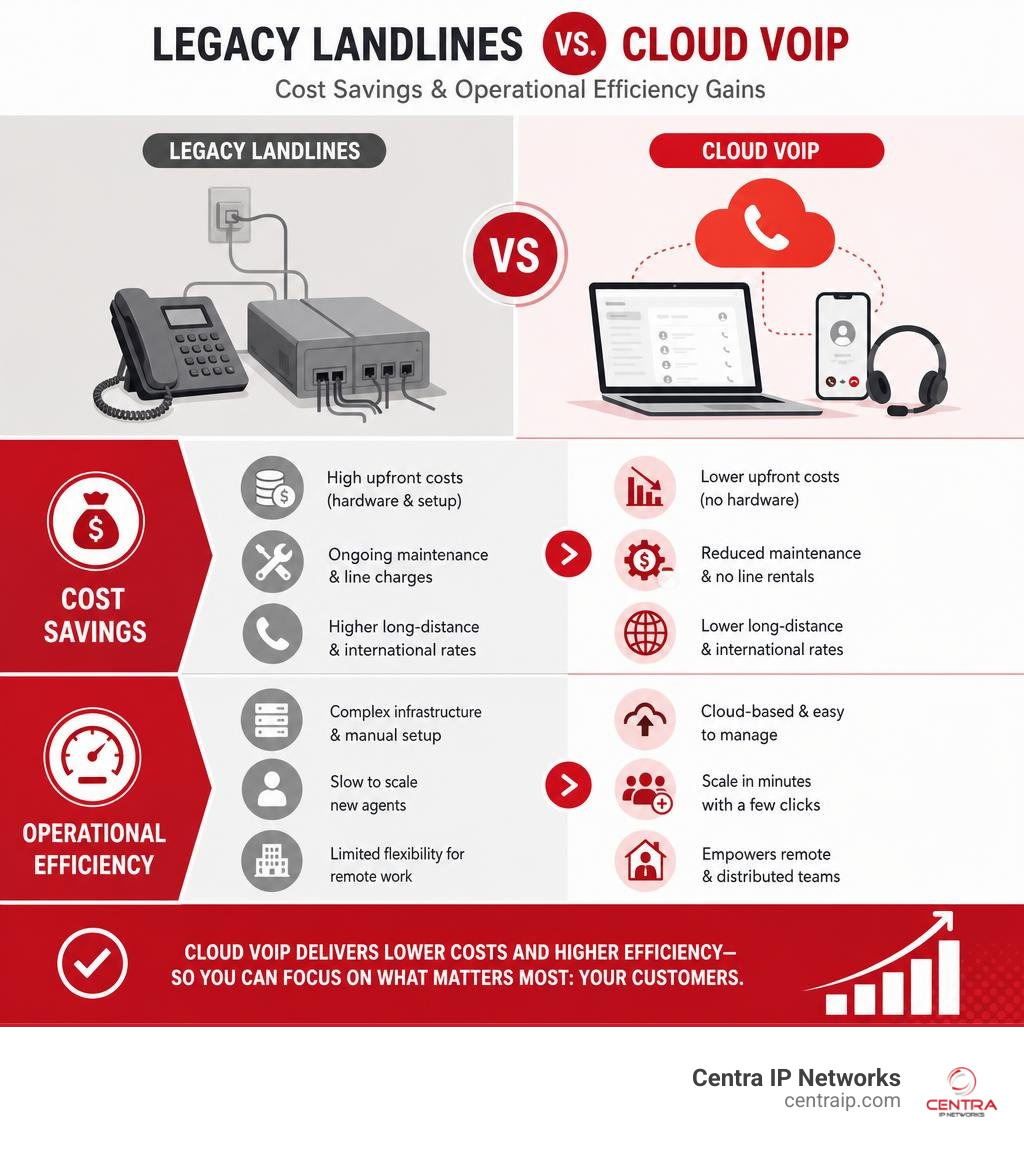
By replacing fixed phone lines with cloud infrastructure, organizations eliminate capital expenditures on PBX hardware and avoid ongoing physical line maintenance. Furthermore, VoIP contact centers deliver global scalability. Whether you are expanding customer support teams across Dallas, Tampa, or Clearwater, adding a new agent requires just a few clicks in an admin portal rather than installing physical copper lines.
This technology also empowers remote workforces. Agents can serve customers from home or satellite offices without losing access to company directories, queue stats, or call tools. For actionable tips on boosting loyalty, check out our guide on How to Master the Contact Center Customer Experience Without Breaking a Sweat.
Core Features of Modern Contact Center VoIP Solutions
Modern cloud communications software equips agents and managers with automated tools designed to streamline daily call management:
- Automatic Call Distribution (ACD): Intelligently routes incoming calls to specific agents or departments based on custom rules, skills matching, or agent availability. Enterprise platforms like the EZACD-8000 IP Contact Center demonstrate how advanced ACD platforms manage hundreds of concurrent skills and call queues smoothly.
- Interactive Voice Response (IVR): Self-service voice menus direct callers to the right department using touch-tone keypad options or natural speech recognition.
- Predictive Dialers: Outbound dialers automatically dial contact lists, filtering out busy signals and unanswered calls to connect agents only to live callers.
- Call Recording & Compliance: Securely records inbound and outbound interactions for quality assurance and training purposes. Discover how to evaluate call quality software with our overview of The Best Call Recording Software for Call Center Success.
Elevating Agent Productivity and Customer Experience
When call management tools integrate directly with everyday business systems, productivity naturally increases. Integrated platforms offer features that empower both supervisors and frontline support teams:
- Real-Time Sentiment Analysis: AI algorithms evaluate caller tone and keywords during live interactions, flagging negative sentiment on supervisor dashboards for real-time intervention.
- Live Whisper Coaching & Barging: Managers can listen to live calls, “whisper” advice directly to the agent without the customer hearing, or “barge” into the call if escalation is necessary.
- CRM Integration & Screen Pops: When a customer calls, the VoIP system searches your customer relationship management (CRM) database and opens a “screen pop” containing the caller’s history, purchase records, and previous support tickets before the agent even says hello.
To see real-world examples of transformed customer interactions, explore our article From Hold Music to High Praise Contact Center Success Stories You Need to Read.
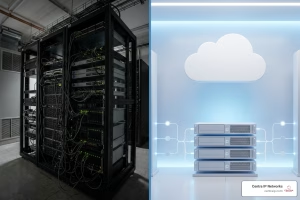
Cloud-Based CCaaS vs On-Premises Architectures
When choosing a contact center voip solution, organizations must evaluate whether a cloud-hosted Contact Center as a Service (CCaaS) or an on-premises IP PBX fits their operational requirements.
| Architectural Feature | On-Premises IP PBX | Cloud-Native CCaaS |
|---|---|---|
| Financial Model | High CapEx (hardware, servers, licensing) | Predictable OpEx (per-user/month subscription) |
| Equipment Maintenance | Internal IT team handles upgrades & repairs | 100% managed by cloud platform vendor |
| Deployment Timeline | Months (hardware ordering & line drops) | Hours or days (web activation) |
| Disaster Recovery | Requires redundant backup servers on site | Built-in geographic redundancy & automatic failover |
| Feature Updates | Complex manual software patches | Automatic cloud feature releases |
| Remote Agent Support | Requires complex VPN configurations | Native access via browser or mobile app |
To explore cloud architectures in depth, read our complete resource What is a Cloud Native Contact Center? The Ultimate Guide to Modern Support.
Dedicated Hardware and On-Premise IP PBX Platforms
On-premises systems require placing physical PBX servers, gateways, and call recorders inside a local server closet or data center. While on-premise hardware gives organizations total physical control over call storage, it demands substantial capital expenditure (CapEx) upfront.
Companies must hire dedicated IT personnel or pay third-party installers to maintain physical equipment, update server patches, and configure PSTN trunk lines. Scaling up during peak sales seasons requires purchasing additional server capacity and expansion cards months in advance.
Cloud-Native CCaaS Platforms
Cloud-native CCaaS platforms eliminate physical server overhead completely. The software is hosted in secure, geographically distributed cloud data centers.
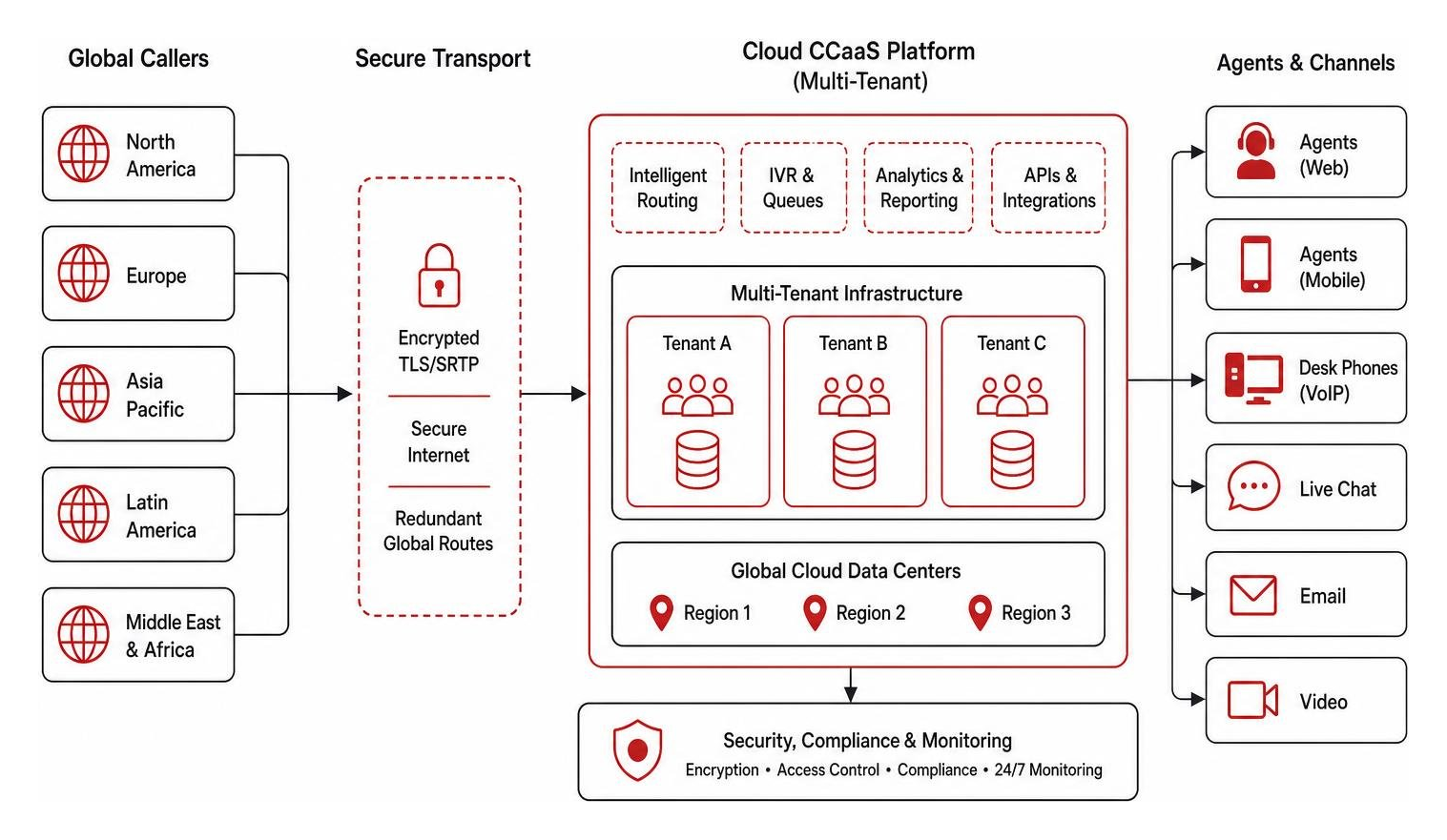
With zero physical servers to maintain on site, businesses shift from heavy capital investments to a flexible operational expenditure (OpEx) subscription model. Dynamic scaling lets managers activate or deactivate agent seat licenses on demand. For a breakdown of cloud voice advantages, browse What is Cloud-Based Call Center Features and Benefits.
Comparing Top VoIP Contact Center Providers and Pricing Models

Choosing the right business software requires comparing features, uptime reliability, and total cost of ownership across top providers.
Leading Vendors in 2026: Nextiva, Five9, RingCentral, Dialpad, and 8×8
Several enterprise software platforms lead the industry in call stability and feature innovation:
- Nextiva: Trusted by over 100,000 businesses worldwide, Nextiva offers a 99.999% uptime SLA across its carrier-grade network. Its call center queues can hold up to 525 calls simultaneously, making it ideal for high-volume support operations.
- Five9: Renowned for advanced agent management features and intelligent virtual agents (IVAs), Five9 delivers deep speech analytics and voice-tone evaluation.
- RingCentral: Provides strong omnichannel routing, unifying voice, team messaging, and video meetings with flexible tiered seat options starting around $65 per agent per month.
- Dialpad: Built natively on artificial intelligence (DialpadGPT), Dialpad offers live transcription, instant AI call summaries, and a 100% uptime SLA on its Enterprise tier.
- 8×8: Features a guaranteed 99.999% SLA covering both platform uptime and call quality, alongside built-in secure DTMF payment options and global calling capabilities.
For regional organizations seeking local customer support or answering partnerships across Florida, localized answering teams highlight how regional support operations integrate seamlessly with cloud communications.
Understanding Cost Structures and TCO
Understanding total cost of ownership (TCO) helps prevent surprise software expenses. Standard cloud contact center pricing follows three primary models:
- Per-User/Per-Agent Monthly Subscriptions: Entry-level core voice tiers range from $15 to $50 per user per month. Specialized contact center seats containing ACD, IVR, and queue tools typically start around $65 to $150+ per agent per month.
- Usage-Based / Per-Minute Plans: Some platforms charge lower monthly base rates alongside per-minute usage fees for inbound and outbound calling, ideal for seasonal contact centers.
- Add-On Capabilities: Specialized tools—such as advanced AI receptionists, workforce management (WFM), or custom CRM integrations—are often offered as optional monthly add-ons.
Security, Compliance, and Quality Guidelines

Because contact center operations deal with sensitive personal data and over-the-phone payments, security and compliance are paramount.
Regulatory Compliance Standards (HIPAA, PCI-DSS, SOC 2)
Your telephony platform must adhere to strict security frameworks depending on your industry:
- HIPAA Compliance: Healthcare call centers serving patients across Dallas, Orlando, or Tampa must ensure call recordings and patient transcripts containing Protected Health Information (PHI) are fully encrypted and supported by signed Business Associate Agreements (BAAs).
- PCI-DSS Compliance: To process credit card details over the phone, platforms use DTMF secure payment technology. When a customer enters card numbers via their telephone keypad, audio frequencies are masked, preventing human agents or voice recorders from seeing or capturing card data.
- SOC 2 Type II Certification: Audits confirm that cloud vendors enforce rigorous security controls to protect client data privacy.
To make sure your recording practices remain compliant, check out The Complete Guide to Contact Center Recording and Compliance.
Call Quality Optimization and Network Requirements
High voice quality requires a healthy network infrastructure. Every active uncompressed voice call consumes approximately 100 kbps of continuous symmetrical bandwidth (both upload and download).

To prevent voice degradation, IT teams must implement Quality of Service (QoS) rules on local network routers. QoS prioritizes real-time voice packets over background data transfers, preventing latency (audio delays), jitter (choppy sound), and packet loss (dropped words).
Implementing and Scaling Your Telephony System
Transitioning to a modern cloud contact center system requires structured planning to ensure zero interruption to daily business activities.
Deployment Steps for Contact Center VoIP Solutions
A successful rollout follows four logical deployment phases:
- Network & Bandwidth Audit: Test internet connectivity, router capacity, and QoS configuration across all company locations to ensure sufficient headroom for peak call volumes.
- SIP & System Configuration: Define auto-attendant menus, IVR routing workflows, call queue rules, and CRM software integrations in the web admin portal.
- Agent Onboarding & Practice: Train team members on softphone interfaces, call transfers, status settings, and whisper/barge capabilities using test accounts.
- Controlled Testing & Launch: Run pilot testing with a small group of agents before initiating full cutover across the entire department.
To set up key performance tracking early in the process, read Stop Guessing and Start Growing with These Call Center Analytics Tools.
Number Porting and Change Management
Businesses can port their existing local and toll-free phone numbers to a new VoIP platform without losing service. Under Federal Communications Commission (FCC) guidelines, phone number porting typically takes 7 to 10 business days to complete.
During the transition window, temporary forwarders ensure inbound customer calls ring through uninterrupted. Clear communication and agent training ease change management, allowing staff to adapt quickly to new dashboard tools.
Frequently Asked Questions about Contact Center VoIP Solutions
What is the primary difference between a call center and a contact center?
A call center handles voice-only phone interactions, utilizing call queues and auto-attendants. A contact center is an omnichannel platform that unifies voice, text messaging (SMS), web chat, email, and social media into a single integrated agent interface.
How much bandwidth is needed to run a VoIP contact center smoothly?
You should allocate at least 100 kbps of symmetrical bandwidth per active concurrent call. For example, a support team running 20 simultaneous calls requires roughly 2 Mbps of dedicated, prioritized upload and download bandwidth, backed by Quality of Service (QoS) network configurations.
Can businesses keep their existing phone numbers when switching to VoIP?
Yes. Businesses can port all existing local, business, and toll-free numbers over to a new cloud VoIP provider. The porting process generally takes between 7 and 10 business days, and temporary call forwarding prevents any service interruptions during the switch.
Conclusion
Upgrading your business phone infrastructure to modern contact center voip solutions unlocks lower operating costs, greater agent flexibility, and the omnichannel tools necessary to keep modern customers happy. Whether you operate a single support office or manage remote agents across Dallas, Fort Worth, Orlando, Tampa, St. Petersburg, Clearwater, or Sarasota, cloud voice technology provides the reliability and performance your company needs to grow.
At Centra IP Networks, we eliminate the headache of managing piecemeal vendors. We provide managed IT, internet connectivity, and cloud communications on one single platform with a single provider and one clear bill. By leveraging our 35+ carrier partnerships, we tailor cost-effective, high-performing voice platforms designed around your exact operational goals.
Ready to transform your customer communications? Explore our tailored Contact Center Solutions or contact our team today to schedule your consultation!