
Why a Virtual Indian Mobile Number Opens Doors
A virtual indian mobile number is a cloud-based phone number with an Indian +91 prefix that works without a physical SIM card, allowing anyone worldwide to establish a local presence in India for receiving calls, SMS, and OTP verifications.
Quick Answer for Getting a Virtual Indian Mobile Number:
- Choose a provider – Select a reputable cloud communications provider that offers international virtual numbers
- Pick your number type – Local city (e.g., 011 for New Delhi, 080 for Bangalore), toll-free (1800), or mobile DID
- Submit documentation – Provide ID and address proof for verification (8-48 hour activation)
- Configure forwarding – Route calls to your existing phone, VoIP system, or mobile app
- Monthly cost – Ranges from $0.13 for temporary SMS verification to $34.95+ for permanent lines
Key limitations: Indian regulations require calls to be forwarded out of the country if you’re not a local resident. SMS support varies by provider, and some services like banking may require physical SIM cards.
When Indian customers see a familiar local number, they’re 75% more likely to answer. That single statistic explains why NRIs, international businesses, and remote teams are racing to secure virtual Indian mobile numbers. Whether you’re maintaining family ties, verifying accounts without exposing your primary number, or entering the Indian market without opening a physical office, these cloud-based numbers solve real problems.
I’m Patrick Brangan, and over 20+ years helping SMBs consolidate their business technology, I’ve seen how virtual indian mobile number solutions transform how companies handle international communication while cutting vendor complexity. Here’s exactly how to get yours set up.
Understanding the Virtual Indian Mobile Number
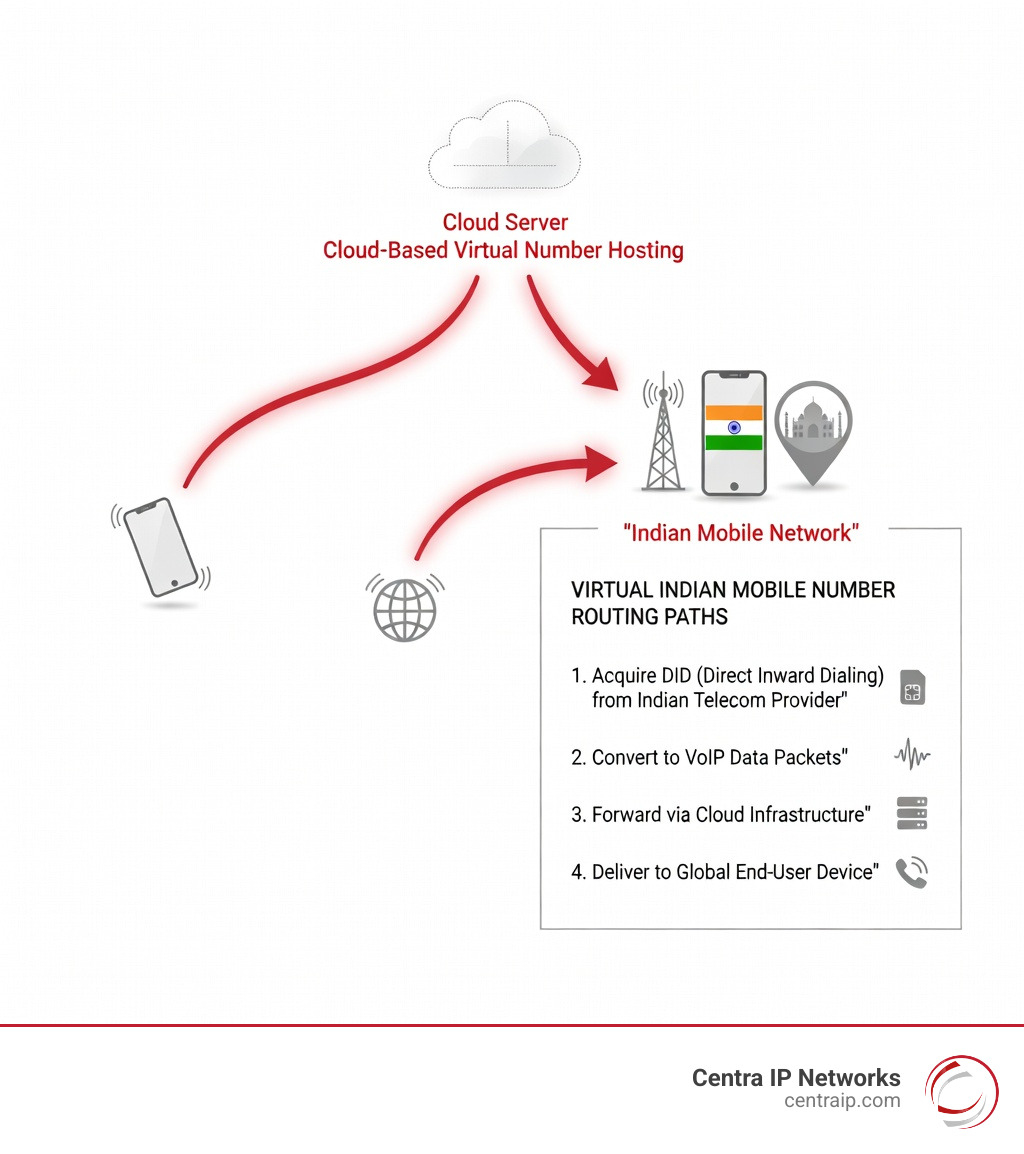
To truly grasp how this works, we have to look past the plastic. A SIM-card is traditionally what links a number to a device, but a virtual indian mobile number lives entirely in the cloud. It is a real, legitimate phone number, but it isn’t tethered to a physical phone line or a piece of hardware in your pocket.
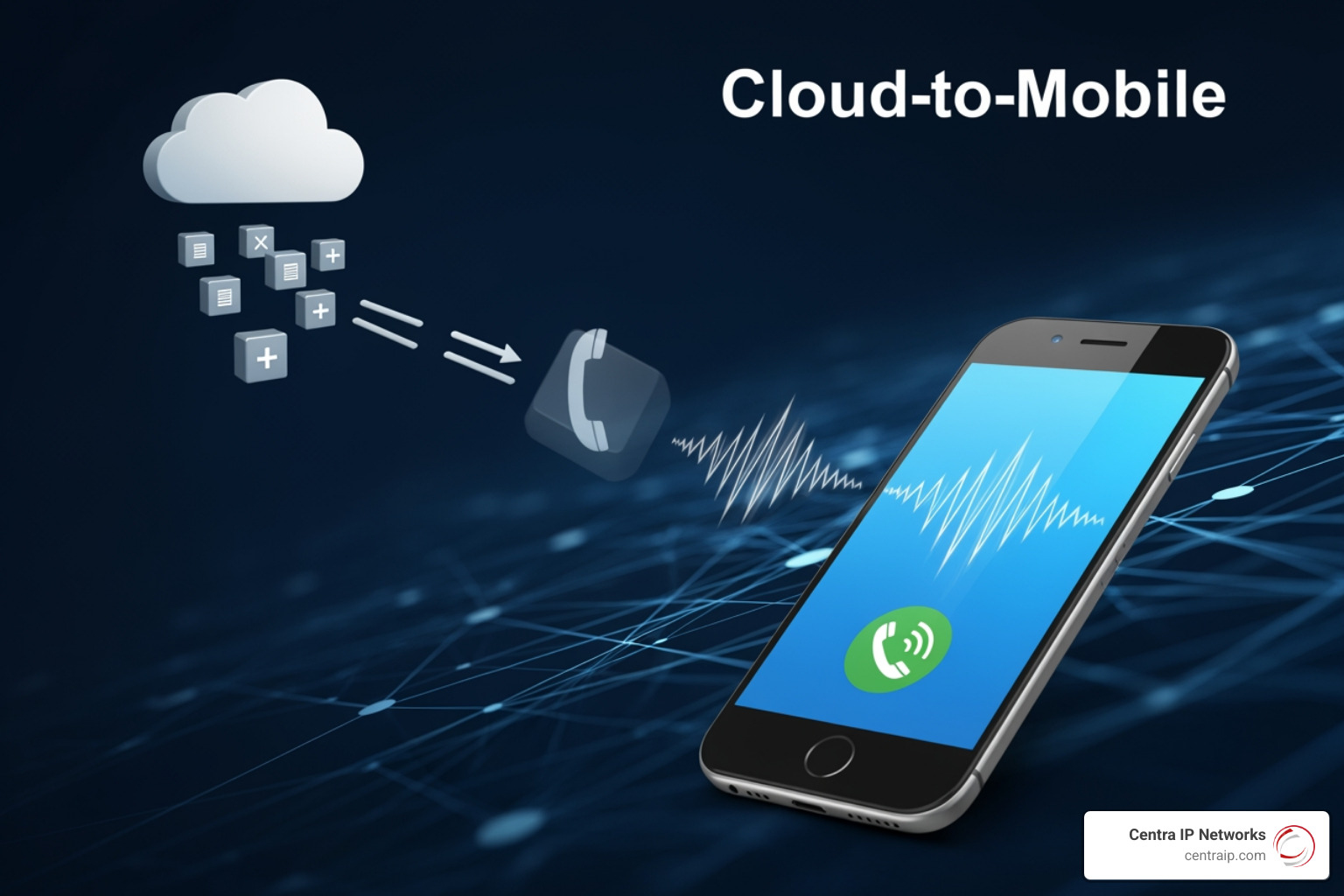
At Centra IP Networks, we often explain this through the lens of VoIP (Voice over Internet Protocol). Instead of signals traveling through copper wires or local cell towers, your voice is converted into data packets and sent over the internet. This allows you to “host” an Indian number on your laptop in Orlando or your smartphone in Dallas.
Beyond the technical wizardry, there is a huge privacy component. Many of our clients use these numbers specifically for Maintaining Privacy While Using a Mobile Number. By using a virtual secondary line, you shield your primary SIM from trackers, unwanted marketing, and data brokers.
Choosing Your Virtual Indian Mobile Number Type
Not all +91 numbers are created equal. Depending on your goals, you’ll need to choose from these specific categories:
- Local City Numbers: These carry specific area codes. If you want to look like you have an office in the capital, you’d choose a New Delhi (11) prefix. For the tech hub, you’d go with Bangalore (80).
- Toll-Free Numbers: Starting with 1800, these are free for the caller within India. These are the gold standard for customer support lines.
- National Numbers: These often start with +91 but aren’t tied to a specific city, offering a broader “all-India” feel.
- Mobile DIDs: These look exactly like standard 10-digit Indian mobile numbers. They are the most versatile for individuals and NRIs who need to receive SMS and OTPs.
Eligibility and Regulatory Restrictions
India’s telecom landscape is strictly regulated by the Department of Telecommunications (DoT). Because of this, getting a virtual indian mobile number isn’t as “click-and-go” as it might be in other countries.
- KYC Requirements: You will almost always need to provide a government-issued ID and proof of address.
- Local Resident Restrictions: Interestingly, local regulations often prohibit Indian residents from using these numbers for purely local calls. Most providers require calls to be forwarded out of India to remain compliant.
- Inbound Focus: Many virtual Indian numbers are “metered” for incoming calls and may have restricted outbound calling capabilities to prevent spam.
- Forwarding Rules: Calls must typically be routed to a VoIP destination or an international number.
Why NRIs and Businesses Need a +91 Presence
If you are an NRI (Non-Resident Indian) living in Tampa or Sarasota, you know the struggle of dealing with Indian banks or government portals from abroad. Having a virtual indian mobile number acts as a digital bridge.
For businesses, the “Local Presence” effect is massive. Research shows Indian customers are 75% more likely to answer a call from a familiar local area code than an international one. Establishing that trust is the first step toward market entry. We’ve seen how 5 Ways VoIP Aids Success in International Business can help small firms compete with giants by appearing local.
Benefits for International Users
- NRI Banking: Receive OTPs for high-value transactions without needing a physical Indian SIM that might expire if not topped up.
- Family Connectivity: Your relatives in India can call you at local rates, while you answer on your smartphone in Fort Worth.
- Traveler Convenience: Set up your accounts (like Uber India or Zomato) before you even land in Mumbai.
Professional Advantages for Global Firms
- Market Entry: Test the Indian market without the overhead of physical infrastructure.
- Customer Support: Provide a toll-free 1800 number to build immediate brand credibility.
- Scalability: Add or remove lines as your team grows, all managed through a single dashboard.
- Virtual PBX Integration: Route calls to specific departments (Sales, Support) regardless of where your employees are physically located.
Step-by-Step: How to Get Your Virtual Number
Ready to get started? The process is straightforward if you have your documents ready. Here is How Do I Get a Virtual Phone Number? custom specifically for the Indian market.
Step 1: Select Your Provider and Region
Your choice depends on whether you need a permanent business line or a temporary number for a single verification.
| Provider Type | Best For | Price Range |
|---|---|---|
| Business Cloud Systems | Professional features & AI | $34.95/mo + metered calls |
| Carrier-Grade Networks | High volume reliability | Varies by volume |
| SMS Verification Services | One-time OTP/SMS | $0.13 – $2.50 per use |
| Enterprise API Solutions | Large-scale integration | Custom/API based |
If you choose a mobile-first approach, you can use a dedicated mobile VoIP app to manage everything from your phone.
Step 2: Documentation and Verification
Once you pick a number, you must complete the KYC (Know Your Customer) process.
- Upload ID: A passport or national ID is usually required.
- Proof of Address: A recent utility bill or bank statement.
- Activation Time: Most numbers are activated within 8 hours, though some requiring deeper verification can take up to 48 hours.
Step 3: Configuration and Call Forwarding
Once active, you’ll use a dashboard to decide where the calls go. You can route them to:
- A Mobile App: Using a softphone app on your iPhone or Android.
- SIP Trunks: Integrating the number into your existing office phone system.
- PSTN Forwarding: Forwarding the call directly to your US mobile number (note: this usually incurs per-minute forwarding costs).
Navigating SMS and OTP Verifications
The most common reason people search for a virtual indian mobile number is for OTP (One-Time Password) verification. Whether it’s for WhatsApp, Telegram, or an Indian bank, the process is a bit of an art form.
Troubleshooting Your Virtual Indian Mobile Number OTPs
If your OTP isn’t arriving, don’t panic. Here is our expert checklist:
- Format Check: Always use the E.164 format (+91 followed by the 10-digit number).
- Wait Windows: OTPs often arrive within 10–60 seconds, but network traffic can delay them. Wait at least 90 seconds before hitting “Resend.”
- Voice Fallback: If the SMS fails, many apps (like WhatsApp) offer a “Call Me” option. Since virtual numbers excel at voice, this is often more reliable than SMS.
- Device Sync: Ensure your device time is set to “Automatic.” If your clock is off by even a minute, some security codes will expire before they reach you.
Temporary vs. Long-Term Rentals
- Disposable Numbers: These are “one-time use” numbers. They are great for a quick sign-up where you don’t care about the account long-term.
- Long-Term Rentals: If you are using the number for a business WhatsApp or a bank account, you must use a long-term subscription. If you lose access to a temporary number, you may be locked out of your account forever during a “re-login” check.
Frequently Asked Questions about Indian Virtual Numbers
Can I use a virtual Indian number for WhatsApp?
Yes, but it depends on the “route” quality of the provider. Private, high-quality routes have much higher success rates than free public numbers, which are often already “blacklisted” by WhatsApp for spam.
Are virtual numbers legal in India?
Yes, they are legal for lawful use. However, you must comply with KYC regulations. Using them for fraudulent activities or bypassing government security measures is strictly prohibited and can lead to immediate termination of the service.
How much does a virtual Indian number cost monthly?
For a permanent, high-quality local number, expect to pay around $30–$35 per month. Toll-free numbers are significantly more expensive, often exceeding $100 per month. If you only need a one-time SMS verification, costs are as low as $0.13 to $2.00.
Conclusion
Establishing a presence in India shouldn’t require a plane ticket or a mountain of hardware. By leveraging a virtual indian mobile number, you can bridge the gap between your home in Clearwater or St. Petersburg and the busy markets of Mumbai or Bangalore.
At Centra IP Networks, we believe in simplifying this complexity. Our Cloud-Based Phone Systems are designed to give you a unified platform where your international numbers, local lines, and internet connectivity all live on one bill. Whether you’re an NRI looking for a reliable way to manage your affairs back home or a business ready to scale, the cloud is your greatest ally.
Ready to streamline your global communications? Let’s get you connected.