Why Text Message Alerts Are a Game-Changer for Business Communication
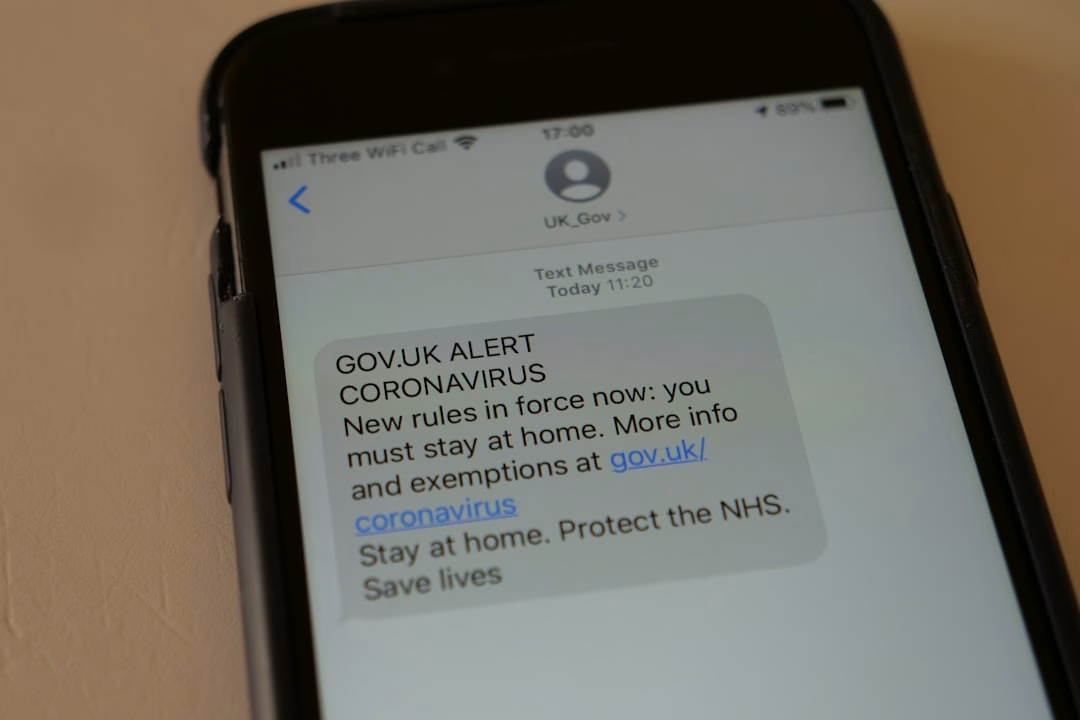
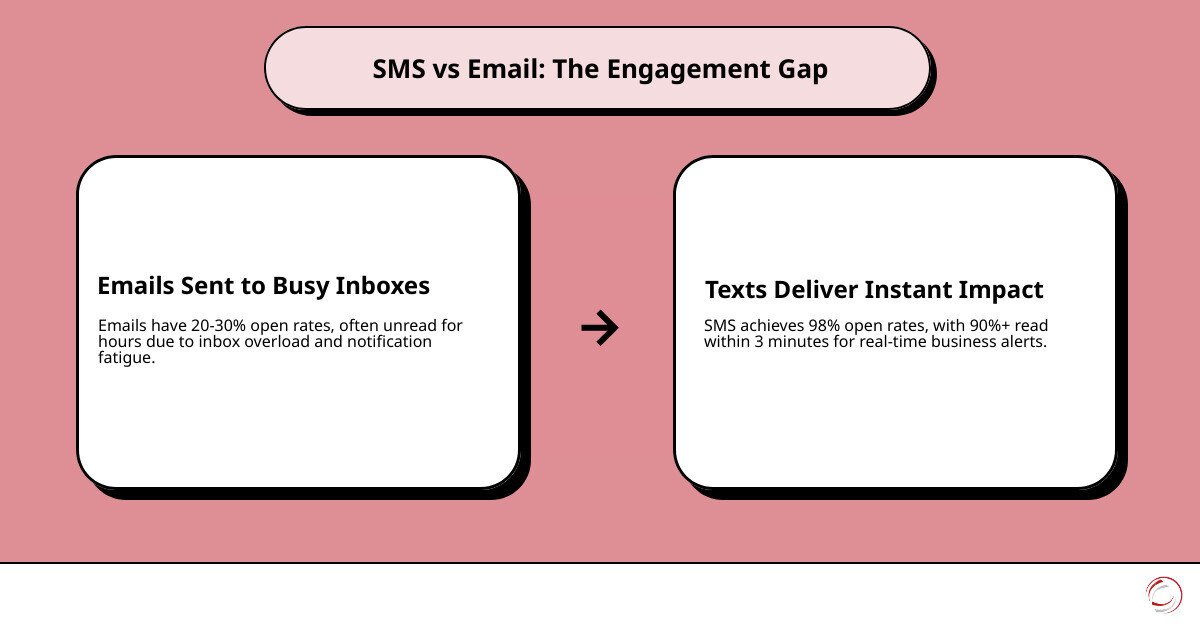
Text message alerts for business are one of the fastest and most reliable ways to reach employees, customers, and teams — with a 98% open rate and most messages read within 3 minutes.
Here are the top platforms covered in this guide:
| Platform | Best For | Starting Price |
|---|---|---|
| Twilio | Developers & enterprise scale | ~$0.0083/message |
| Textline | Team collaboration & security | Free 14-day trial |
| EZ Texting | SMBs & marketing alerts | From $25/month |
| Mobile Text Alerts | All-in-one alerts & marketing | Free 14-day trial |
| Text Request | Sales & customer engagement | Custom plans |
| RedFlag | Emergency & safety alerts | Custom plans |
| SimpleTexting | Ease of use & automation | From $39/month |
Despite how effective SMS is, only 11% of businesses currently use it — even though 54% of consumers want to receive business texts. That gap is a real opportunity.
Email open rates hover around 20-30%. SMS blows past that. When something is urgent — a weather closure, a system outage, a shift change — a text gets through when nothing else will.
I’m Patrick Brangan, and with over 20 years of experience in business technology and unified communications for SMBs, I’ve seen how the right text message alerts for business strategy can transform how companies communicate. In the sections below, I’ll walk you through the top platforms and everything you need to choose the right one.
Why Your Organization Needs text message alerts for business
In the markets of Dallas, Fort Worth, and across Florida’s I-4 corridor from Tampa to Orlando, speed isn’t just a luxury- it’s a requirement. Whether you are managing a logistics hub in Fort Worth or a medical practice in Sarasota, the ability to reach your people instantly is what keeps the wheels turning.
Traditional communication methods are failing us. We’ve all seen it: an urgent email about a server outage sits unread in an inbox for hours, or a phone tree for a shift change results in a dozen voicemails that nobody checks. By the time the message is received, the opportunity (or the crisis) has already evolved.
This is where text message alerts for business come in. According to Business Texting Statistics, 90% of consumers actually prefer texting over phone calls. Furthermore, texts boast a staggering 99.96% delivery rate. When we send a text, we aren’t just “hoping” it arrives; we are virtually guaranteed that it will land in the recipient’s hand within seconds. For broader context on how the technology works, the Short Message Service standard remains the foundation of modern business texting.
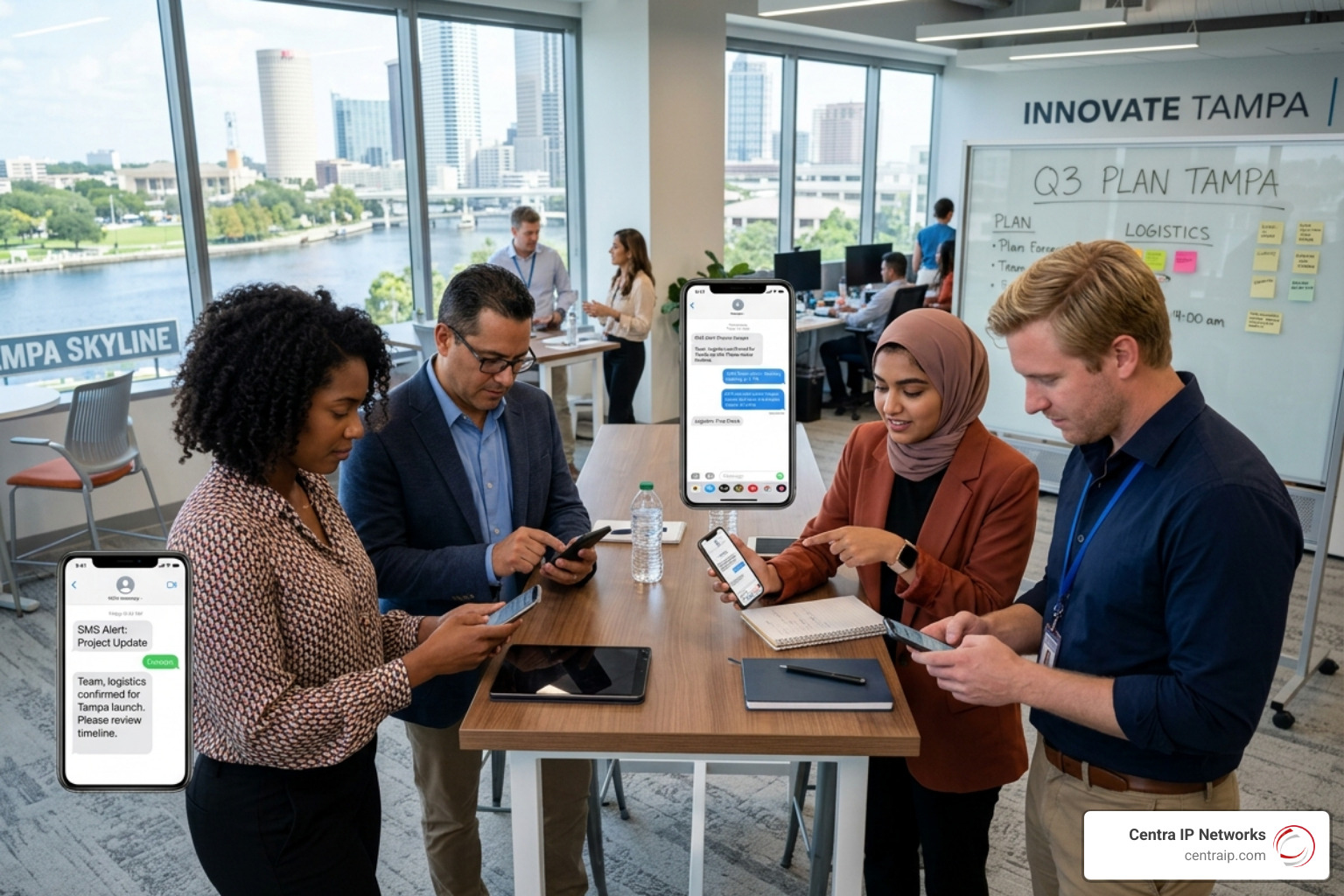
For internal teams, SMS is the ultimate tool for reliability. If a severe summer storm hits Tampa or a “blue norther” freezes the roads in Dallas, you need to tell your employees to stay home before they start their commute. A text alert ensures that message is seen immediately.
For customer-facing operations, it’s about engagement. Whether it’s a dental office in Clearwater sending an appointment reminder or a retail shop in Orlando announcing a flash sale, SMS cuts through the noise. You can learn more about how these mechanics work in our deep dive on Business SMS: How It Works and Use Cases.
7 Leading Platforms for SMS Notifications
Choosing the right platform is like choosing a business partner. You need someone reliable, scalable, and easy to work with. In 2026, the market is more specialized than ever. Here is our breakdown of the top seven platforms currently leading the industry.
| Feature | Twilio | Textline | EZ Texting | Mobile Text Alerts | Text Request | RedFlag | SimpleTexting |
|---|---|---|---|---|---|---|---|
| Primary Focus | API/Enterprise | Team Collab | Marketing/SMB | All-in-One | Sales/Service | Safety/Emergency | Automation |
| Two-Way SMS | Yes | Yes | Yes | Yes | Yes | Yes | Yes |
| MMS Support | Yes | Yes | Yes | Yes | Yes | Yes | Yes |
| Ease of Setup | Technical | Simple | Simple | Simple | Moderate | Moderate | Simple |
| Key Strength | Customization | Security | Templates | Reliability | Support | Compliance | UI/UX |
Choosing the right text message alerts for business for your scale
Before you sign a contract, we always recommend looking at three things: your team size, your technical capability, and your specific use case.
If you are a small business in St. Petersburg with five employees, you don’t need a complex API-driven system that requires a developer. You need something “plug-and-play.” However, if you are a large enterprise with thousands of employees across Texas and Florida, scalability and HRIS integration become your top priorities.
Budget is also a factor, but we caution against looking only at the “per-text” cost. Consider the ROI of a missed emergency alert or a missed sales lead. For larger organizations, we’ve outlined the specific needs of high-volume users in our guide on Enterprise SMS Messaging: Why Your Business Needs a Better Solution.
Top-rated SMS alert providers for 2026
Twilio: Twilio remains the gold standard for companies that want to build their own custom workflows. With 99.95% API uptime and the ability to reach 180+ countries, it’s the engine behind some of the world’s largest notification systems. It’s perfect for the tech-heavy firms in the Dallas-Fort Worth “Silicon Prairie.”
Textline: If security and team collaboration are your main concerns, Textline is a top contender. They offer “Smart SMS,” which can match the area code of your recipient (great for building local trust in places like Orlando or Sarasota). Their dashboard is built for teams to manage conversations together without stepping on each other’s toes.
EZ Texting: EZ Texting is fantastic for businesses that want to bridge the gap between alerts and marketing. They’ve found that pre-appointment texts can cut no-shows by up to 92%. For a busy medical clinic in Clearwater, that’s a massive boost to the bottom line.
RedFlag: When safety is the only thing that matters, RedFlag is the specialist. They focus heavily on emergency mass notifications and compliance. If you’re managing a large facility or a campus, their multi-channel approach ensures that if a text doesn’t work, an email or voice call follows immediately.
Mobile Text Alerts: This is a great “middle-of-the-road” platform that handles both marketing and internal alerts with ease. They boast a 99.96% delivery rate and offer a mobile app that lets you send a mass alert in under 20 seconds. It’s highly dependable for growing businesses that need a service that “just works.”
Text Request: Known for their “white glove” support, Text Request is excellent for businesses that want to use their existing business landline number to send and receive texts. This keeps your branding consistent across all platforms.
SimpleTexting: Consistently rated as one of the easiest platforms to use, SimpleTexting is great for those who want to set up automated “drip” campaigns or simple keyword-based alerts (e.g., “Text JOIN to 555888”).
For our clients in Florida looking for a more localized, managed approach, Access Answering Service provides a specialized layer of secure communication, particularly for the healthcare and professional services sectors where privacy is paramount.
Critical Features, Use Cases, and Compliance
The true power of text message alerts for business isn’t just in sending a message; it’s in the features that make those messages actionable.
Key Features to Look For:
- Two-Way Messaging: Don’t just talk at your employees or customers; let them talk back. If you send a shift alert, you want them to be able to reply “YES” to claim it.
- HRIS and CRM Syncing: For businesses in Dallas or Tampa with high turnover or large staff counts, manually updating phone numbers is a nightmare. Look for platforms that sync automatically with your HR software or CRM.
- Segmented Lists: You don’t want to alert your Orlando warehouse staff about a plumbing issue in your Fort Worth office. Segmentation ensures the right people get the right message.
- Scheduled Messaging: Set up your holiday hours or routine reminders weeks in advance.
Real-World Use Cases:
- Emergency Notifications: Think severe weather alerts, fire drills, or security threats. In Florida, hurricane season makes this a non-negotiable feature for business continuity.
- Shift Scheduling: Healthcare, hospitality, and retail businesses use SMS to fill open shifts in minutes rather than hours.
- IT Network Outages: If the Wi-Fi goes down, you can’t send an email to tell people the Wi-Fi is down. SMS is the “out-of-band” communication hero.
- Customer Loyalty: As we discuss in 5 Industries that Benefit from SMS Marketing, retail and food service can use alerts for flash sales or “order ready” notifications to Improve Customer Loyalty with Business Texting.
Frequently Asked Questions about Business SMS
How do I ensure TCPA compliance for text message alerts for business?
Compliance is the “boring but essential” part of SMS. The Telephone Consumer Protection Act (TCPA) is the primary law governing business texting. To stay safe:
- Get Explicit Opt-In: You cannot just buy a list of numbers and start texting. Users must “opt-in,” either by texting a keyword to your number or checking a box on a web form.
- Provide an Easy Opt-Out: Every initial message should include “Reply STOP to unsubscribe.”
- 10DLC Registration: In 2026, carriers require businesses to register their “10-Digit Long Code” (your standard business number) for A2P (Application-to-Person) messaging. This proves you are a legitimate business and not a spammer.
What is the difference between SMS marketing and employee alert systems?
While the technology is the same, the intent and rules differ.
- SMS Marketing is promotional. It’s about driving sales, coupons, and engagement. It has the strictest opt-in requirements.
- Employee Alert Systems are often “transactional” or “operational.” While you still need consent, these are focused on the “need to know” info: schedule changes, safety alerts, and company updates.
- Workforce Safety systems (like RedFlag) are specialized versions of employee alerts that prioritize speed and multi-channel delivery above all else.
How much do business SMS alert services typically cost?
Pricing usually follows one of three models:
- Pay-per-text: You buy “credits.” This is great for low-volume users. Prices usually range from $0.01 to $0.05 per message.
- Monthly Subscriptions: You pay a flat fee for a set number of messages (e.g., $25/month for 500 texts). This is the most common for SMBs.
- Enterprise/Volume Discounts: For companies sending millions of messages (like the financial firms Twilio services), rates can drop to a fraction of a cent. Note: Be aware of “Carrier Fees.” These are small pass-through charges from companies like Verizon or AT&T that some platforms include in their price, while others add them on top.
Conclusion
At Centra IP Networks, we believe that communication shouldn’t be fragmented. Whether you are in Dallas, Fort Worth, or anywhere along the Florida coast from Tampa to Sarasota, your business deserves a unified approach.
The best text message alerts for business strategy is one that integrates seamlessly with your existing Managed IT and Cloud Communications. Imagine a world where your phone system, your internet, and your emergency SMS alerts are all managed on one platform, with one bill, and one provider who actually knows your name.
That is the “Centra Way.” We leverage over 35 partnerships to ensure you get the most cost-effective, tailored solution for your specific location. Don’t let your critical messages get lost in the noise of a crowded inbox. It’s time to embrace the speed and reliability of SMS.
Ready to streamline your communications? Explore our solutions for Business Text Messaging and see how we can help your business succeed in 2026 and beyond.