
What is SIP Trunking and How Does it Work?
Free SIP trunking refers to SIP trunking services available at no per-channel or per-trunk cost, typically through one of three models:
- Permanent free tiers – $0 per channel, paying only for phone numbers and per-minute usage (often starting around $1.50/month per number)
- Commercial free trials – Time-limited access to test call quality and features before committing to a paid plan
- Bundled free trunking – Included at no extra charge with a paid hosted PBX account
Note: “Free” almost never means zero cost — you still pay for phone numbers, per-minute usage, or a base account fee.
Here’s the honest picture: free SIP trunking can be a smart way to test, learn, or handle very low call volumes. But it comes with real trade-offs in reliability, security, and compliance that matter a lot for businesses that depend on their phones.
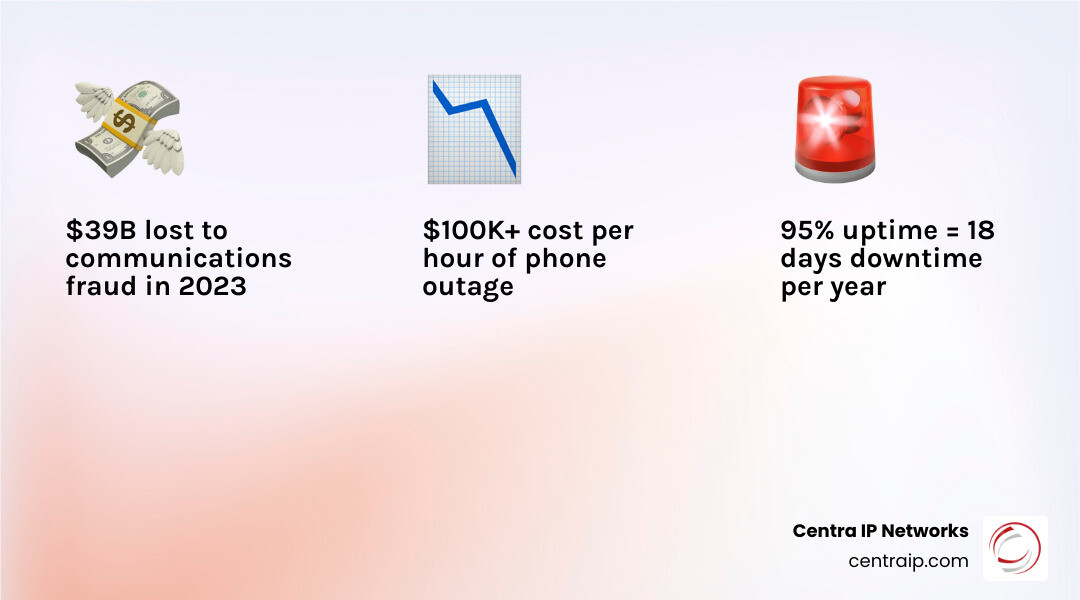
In 2023, communications fraud drained an estimated $38.95 billion from carriers and enterprises — much of it through poorly secured VoIP endpoints. And community-grade free SIP nodes typically report uptime below 95%, compared to 99.99% for paid services. That gap translates to more than 36 hours of potential downtime per month.
This guide breaks down exactly what free SIP trunking is, who it’s right for, and what risks to watch out for — so you can make a clear-eyed decision for your business.
I’m Patrick Brangan, and with over 20 years in business technology — specializing in unified communications for SMBs across Dallas, Tampa, and Orlando — I’ve helped dozens of companies navigate the decision between free SIP trunking and production-grade solutions. Understanding where free options fit (and where they fall short) is something I work through with clients every week.
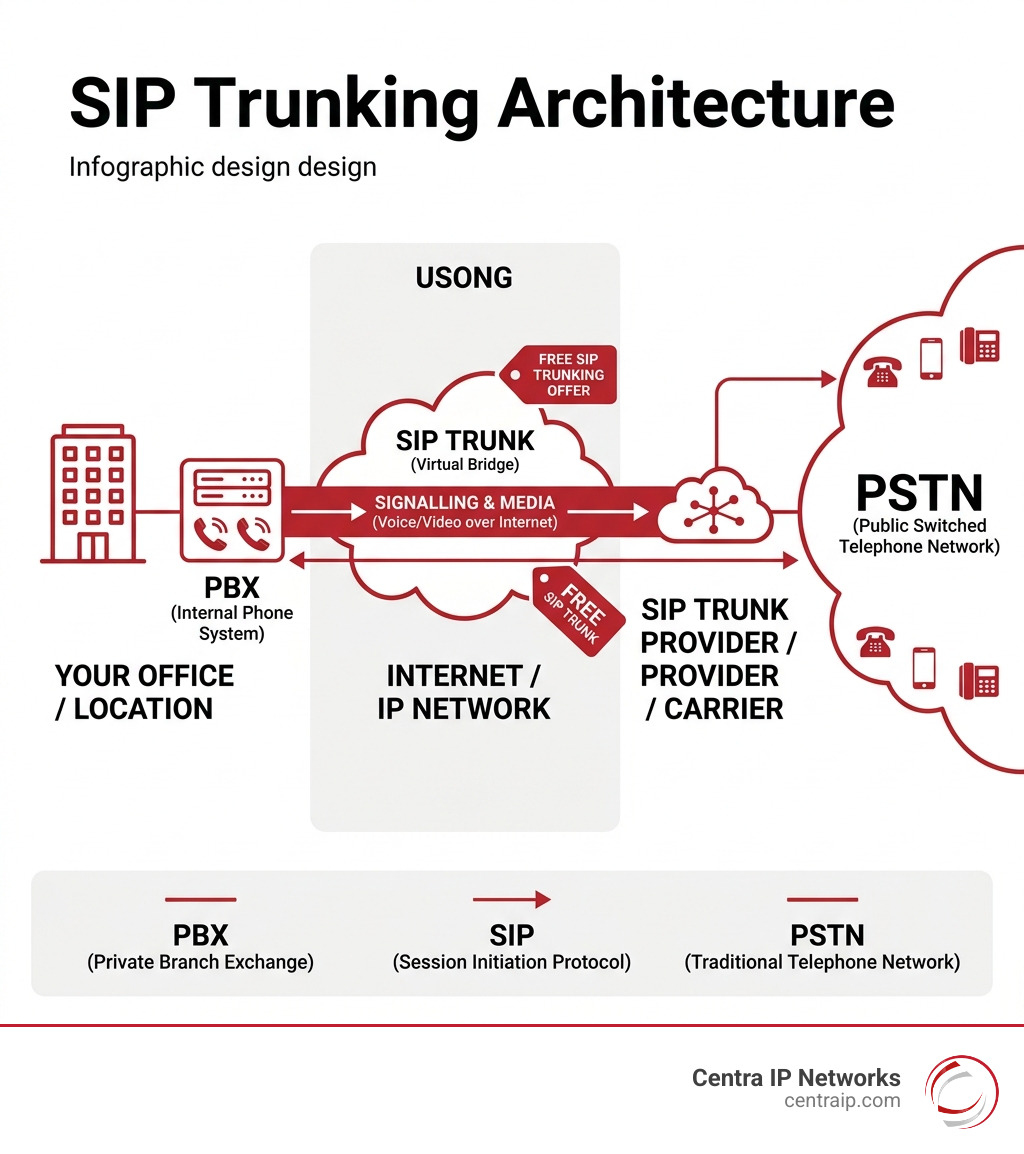
To understand free SIP trunking, we first have to look at what a SIP trunk actually does. Think of it as a virtual bridge. On one side, you have your office’s internal phone system, known as a Private Branch Exchange (PBX). On the other side is the Public Switched Telephone Network (PSTN)—the traditional network that connects every phone on the planet.
In the old days, we used physical copper wires or T1 lines to make this connection. Today, we use Session Initiation Protocol (SIP). SIP is an application-layer protocol that establishes, manages, and tears down voice and video calls over the Internet. A “trunk” is essentially a collection of “channels.” Each channel allows for one concurrent call.
When you use What You Need to Know: SIP Trunks / SIP Lines, your voice is turned into digital packets and sent over your IP network. This eliminates the need for expensive hardware upgrades every time you want to add a new line. You aren’t limited by physical wires; you’re only limited by your internet bandwidth.
Understanding the Different Types of Free SIP Trunking
When you search for free SIP trunking in May 2026, you’ll find that “free” is a spectrum. Providers generally use these offers as a way to get you into their ecosystem.
Permanent Free Tiers
Some providers offer a “freemium” model. They don’t charge you a monthly fee for the “trunk” itself (the connection), but they charge for the resources you use. For example, you might pay $1.50 per month for a local phone number (DID) and a few cents per minute for calls. This is great for a small office in Fort Worth or Clearwater that only makes a handful of calls a day.
Commercial Free Trials
Many enterprise-grade providers offer trials. Various providers might give you a set amount of minutes or a 21-day window to test their call quality. These are “proof of concept” tools. They allow IT managers to verify that their firewall settings and NAT traversal are working correctly before signing a contract.
Bundled Services
In this model, the SIP trunking is “free” because it’s included in another service. For instance, some hosted PBX plans include the trunking connection to the outside world at no extra cost per channel, provided you pay for the hosted PBX seats.
| Feature | Permanent Free Tier | Commercial Trial | Bundled Service |
|---|---|---|---|
| Trunk Cost | $0 | $0 (Temporary) | Included in PBX fee |
| Minute Cost | Pay-as-you-go | Usually included credits | Often unlimited |
| Support | Community/Self-serve | Limited | Full Support |
| Best For | Labs/Micro-business | Testing/Validation | Standard Business |
Open-Source Software and Free SIP Trunking
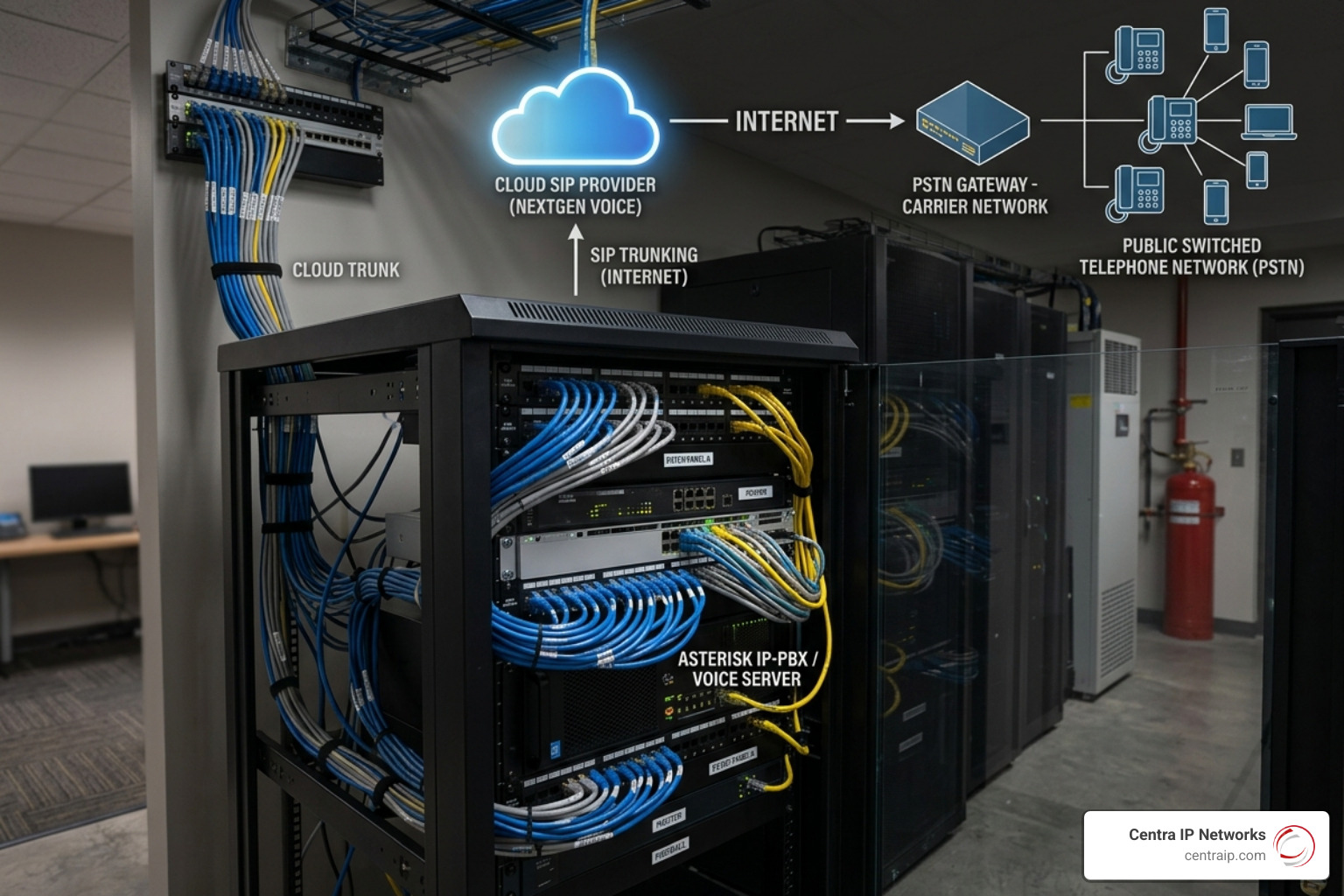
If you are a fan of open-source, you’ve likely heard of Asterisk or FreePBX. These are free software frameworks that allow you to build your own phone system. While the software is free, connecting that software to the real world still requires a SIP provider.
Some communities offer nodes for testing, such as Free Internet communications | SIP2SIP. These services often use the SIP Thor platform to provide high-availability communication for hobbyists and developers. However, these are rarely suitable for a law firm in Sarasota or a medical clinic in Orlando because they lack the service level agreements (SLAs) businesses require.
Real-World Limitations of Free Tiers
Before you move your entire company to a free SIP trunking plan, you need to look at the fine print.
- Concurrent Call Limits: A free account might limit you to 1 or 2 calls at a time.
- International Restrictions: Most free tiers block international dialing to prevent fraud.
- Duration Caps: Some providers might terminate a call automatically after a certain amount of time (e.g., 8 hours) to prevent “ghost calls” from racking up data.
- No E911: This is the biggest hurdle. Emergency services require a verified physical address attached to a phone number. Many free providers simply don’t offer this, which can be a legal nightmare for businesses.
The Risks, Security, and Hidden Costs of Free Services
The old saying “there’s no such thing as a free lunch” applies heavily to telecom. While you might save $20 a month on subscription fees, the risks can be staggering.
Toll Fraud and Financial Exposure
Communications fraud is a massive industry. In 2023, it cost businesses nearly $39 billion. Hackers look for “free” or poorly configured SIP accounts. Once they gain access, they use your trunk to route thousands of international calls to high-cost destinations. Because many free SIP trunking accounts are prepaid or have “auto-refill” enabled, you could wake up to a drained bank account before you even realize there’s a problem.
The Cost of Downtime
We often talk about The Many Benefits of SIP Trunking for Your Business, but those benefits vanish if the service goes down. For a mid-sized firm, one hour of phone service loss can cost between $100,000 and $1 million in lost productivity and sales. Free services often have uptimes of 95%—which sounds good until you realize that means 18 days of “allowable” downtime per year.
Setting Up Your Free SIP Trunking Connection
If you’ve decided to use a free trunk for testing in your lab, the setup process is fairly standard across most PBXs like Asterisk or 3CX.
- Obtain Credentials: You’ll get a SIP Server address, a Username (often the phone number), and a Secret (password).
- IP Whitelisting: For security, tell your provider exactly which IP address your PBX is using. This prevents anyone else from using your credentials.
- NAT Traversal: If your PBX is behind a router, you’ll need to configure “Keep-Alives” or use a STUN server so the provider knows how to find you.
- Codec Selection: Most free providers prefer G.711 (ulaw) for quality or G.729 for bandwidth savings.
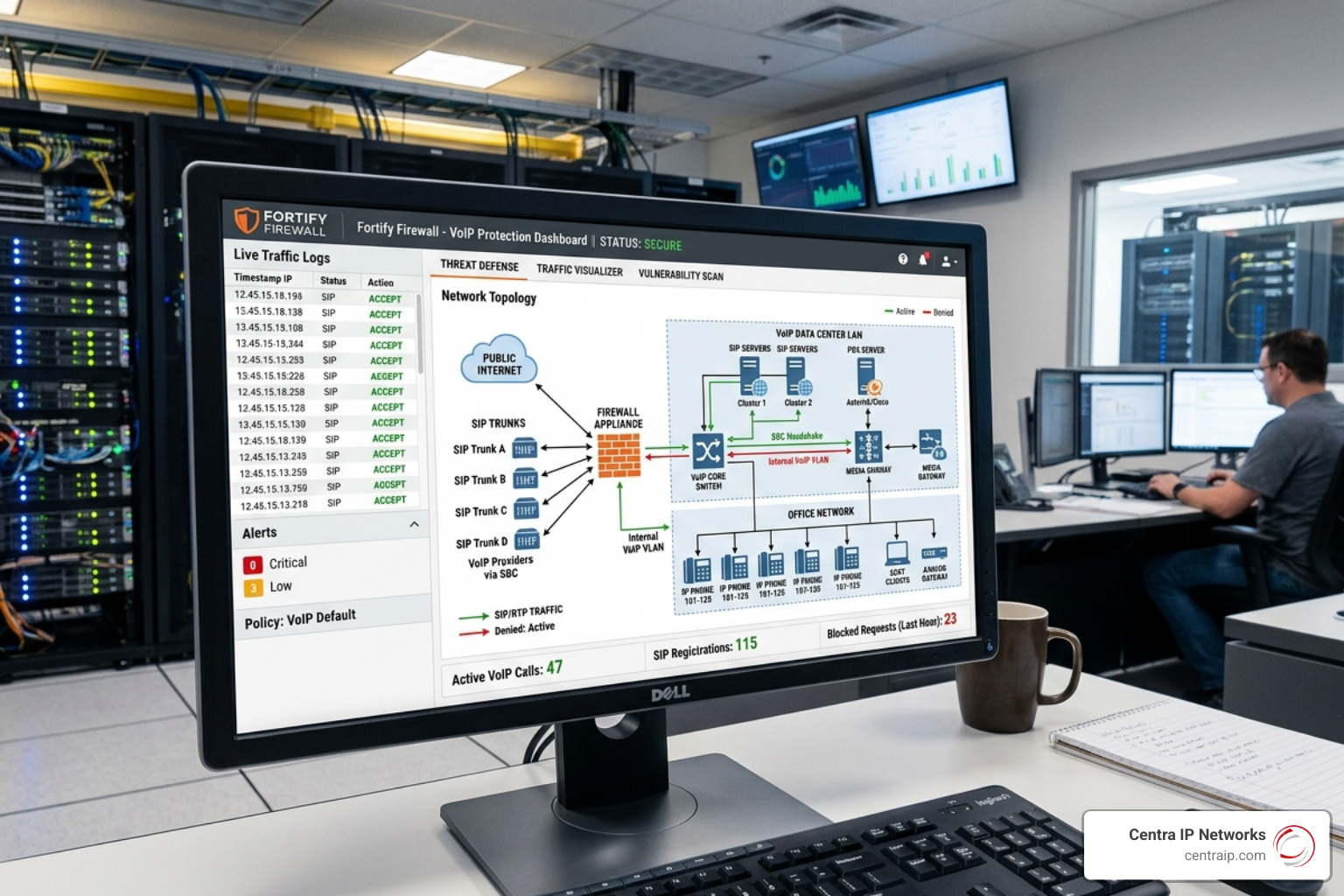
- SBC Deployment: For anything beyond a simple test, we recommend using a Session Border Controller (SBC) as a security buffer between your network and the internet. This is a core part of Advanced SIP Trunking architecture.
Security Best Practices for SIP Endpoints
If you are using free SIP trunking, you are responsible for your own security. Unlike a managed service from us at Centra IP, free tiers leave the “heavy lifting” to you.
- Encryption: Always use TLS 1.3 for signaling and SRTP for the actual voice data. This prevents people from “eavesdropping” on your calls.
- Strong Passwords: Never use the default password. Use at least 16-character alphanumeric strings.
- CDR Monitoring: Check your Call Detail Records daily. Look for spikes in volume or calls to countries you don’t do business with.
- Rate Limiting: Set a cap on how many calls can be made per minute.
Frequently Asked Questions About Free SIP
Does free SIP trunking support E911 and emergency services?
Generally, no. Most truly “free” or community-grade SIP trunks do not include E911. In the United States, legislation like Kari’s Law and the Ray Baum Act requires businesses to provide accurate location data to emergency dispatchers. Because free providers often don’t have the infrastructure to verify and route these calls, you may be in violation of federal law if you use them as your primary business line.
Can I use a free SIP trunk for my business in 2026?
You can, but you probably shouldn’t for your main production line. Free trunks are excellent for developers, students, or testing a new PBX feature. However, businesses in Tampa or St. Petersburg need a 99.99% uptime SLA to ensure they never miss a client call. For a professional environment, you should Unlock Business Potential with Spectrum’s SIP Lines or similar enterprise-grade connections that offer guaranteed reliability.
What are the signs I need to upgrade to a paid trunk?
If you notice frequent “one-way audio,” dropped calls, or if your business is growing beyond two concurrent calls, it’s time to upgrade. Roughly 40% of users who start with free accounts convert to paid plans within three months because they realize they need professional technical support. If you’re looking for business phone system services in Fort Worth, you’ll find that the cost of a paid trunk is a small price for the peace of mind it brings.
Conclusion
Free SIP trunking is a fantastic tool for the right job. It’s perfect for the “lab” phase of a project, for learning how VoIP works, or for a developer building the next great communication app. It allows you to experiment without a financial commitment.
However, for a business operating in Dallas, Orlando, or Clearwater, your phone line is your lifeline. The “hidden” costs of free services—lack of E911, vulnerability to toll fraud, and the high cost of downtime—usually outweigh the $15–$20 monthly savings.
At Centra IP Networks, we believe in simplifying your technology. We offer Advanced SIP Trunking on a single, secure platform. By leveraging our 35+ partnerships, we can provide you with a tailored, cost-effective solution that includes the security, compliance, and 24/7 support that free tiers simply can’t match.
If you’re ready to move past the “testing” phase and want a phone system that just works, give us a call. We’ll help you build a communication strategy that grows with your business, without the risks of the “free” world.