

The Best VoIP Service Providers Compared (April 2026)
VoIP service providers have become the go-to choice for businesses replacing outdated phone systems — and for good reason. Here’s a quick look at the top options:
| Provider | Best For | Starting Price | Uptime |
|---|---|---|---|
| RingCentral | Overall business use | $20/user/mo | 99.99% |
| Zoom Phone | Budget-conscious teams | $15/user/mo | 99.99% |
| Ooma | Small business & home | $11.99/mo | 99.99% |
| Vonage | Residential & APIs | $13.99/user/mo | 99.99% |
| VoIP.ms | Pay-as-you-go flexibility | $1.10/mo | Varies |
Switching phone systems can feel risky. You’re worried about dropped calls, lost numbers, and tangled contracts — all while trying to keep your business running.
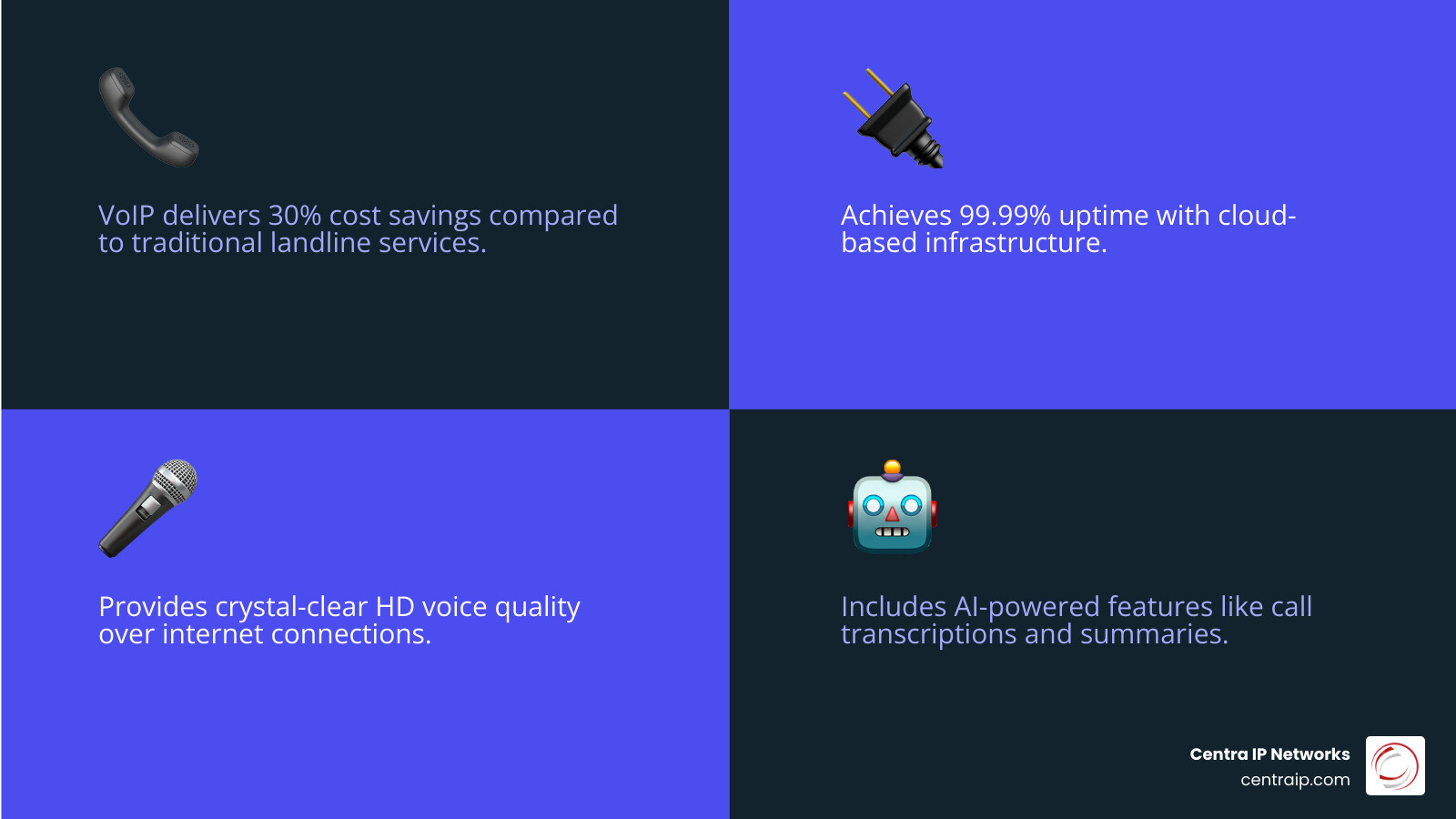
But here’s the thing: modern VoIP has quietly gotten very good. Cloud-based voice technology now delivers HD call quality, built-in AI features, and real cost savings — typically 30% less than legacy phone solutions — without the headaches of old copper-wire infrastructure.
This guide cuts through the noise and compares the top providers side by side, so you can make a confident decision.
I’m Patrick Brangan, and over the past 20+ years I’ve helped hundreds of SMBs across Dallas, Tampa, and Orlando find the right VoIP service providers to simplify their communications stack. Whether you’re running 10 phones or 200, the wrong choice costs more than money — it costs productivity.
Voip service providers terms to know:
Understanding VoIP: How It Works and Why It Beats Landlines
If you’ve ever used FaceTime, Skype, or joined a Microsoft Teams meeting, you’ve already used VoIP. VoIP stands for Voice over Internet Protocol. In simple terms, it’s a technology that allows you to make voice calls using a broadband internet connection instead of a regular (analog) phone line.
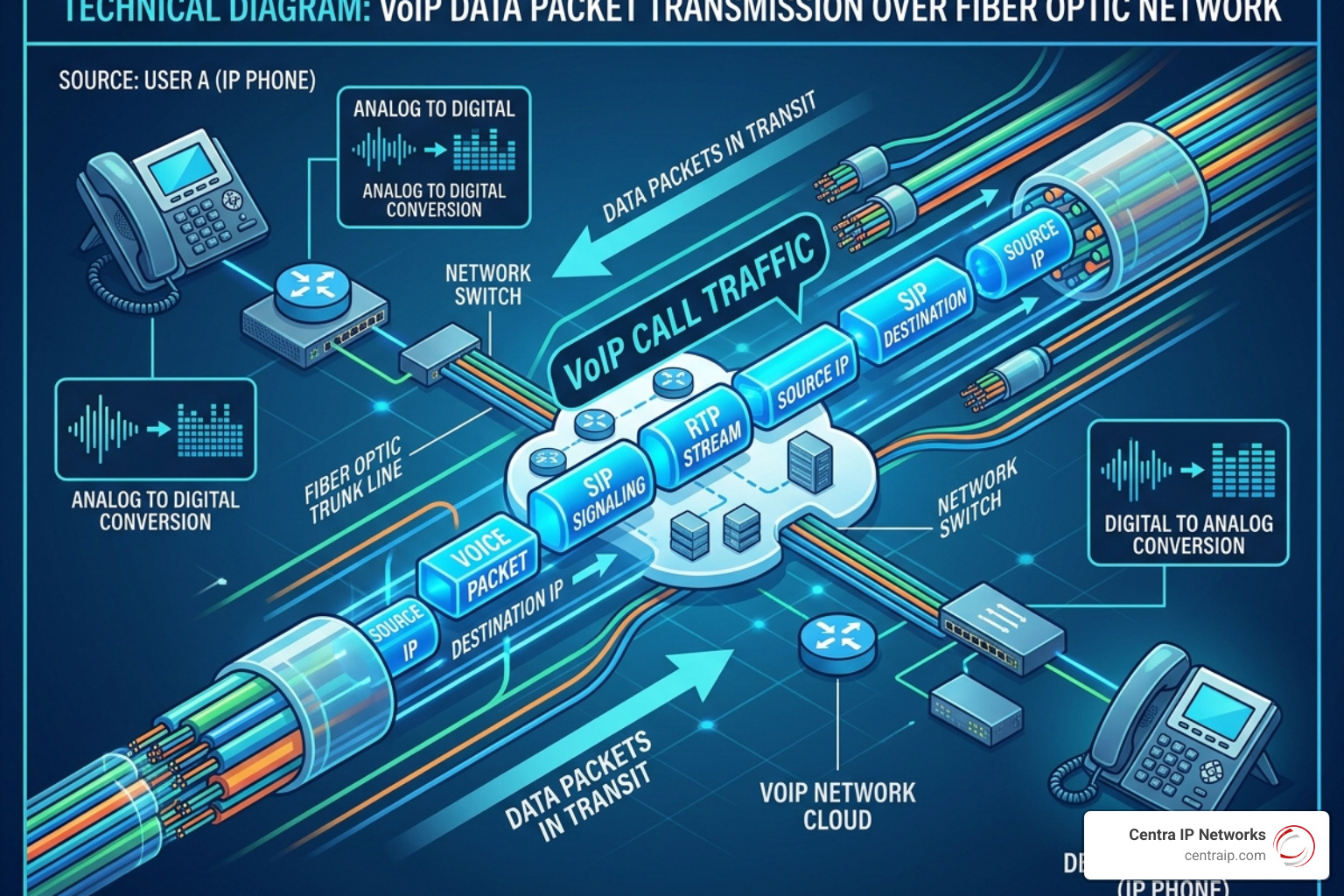
But how does it actually work? When you speak into a VoIP phone, your voice is converted into digital data packets. These packets travel over the internet—often via high-speed fiber optic cables—using protocols like SIP (Session Initiation Protocol) for setting up the call and RTP (Real-time Transport Protocol) for moving the actual audio. Once they reach the recipient, they are reassembled back into clear audio.
VoIP vs. Traditional Landlines
The differences between modern voip service providers and traditional landline companies are night and day. Traditional landlines (PSTN) rely on aging copper wires that are prone to corrosion and limited in how much data they can carry.
When we look at VoIP vs landline for business: key differences explained, several factors stand out:
- Technology: Landlines use analog signals; VoIP uses digital light transmission via fiber optics.
- Flexibility: A landline is tied to a physical wall jack. A VoIP number can live on your desk phone, your laptop, and your smartphone simultaneously.
- Scalability: Adding a new line to a landline system often requires a technician and new wiring. With VoIP, you just click a button in an admin portal.
- Maintenance: Traditional PBX hardware is bulky and expensive to fix. Most modern businesses now choose between on-premise vs cloud PBX, with cloud-hosted options winning out for ease of use.
Key Benefits and Essential Features for 2026
By April 2026, the “standard” phone system has evolved. It’s no longer just about making a call; it’s about how that call integrates with the rest of your work. The positives of VoIP extend far beyond just a lower bill.
1. Massive Cost Savings
One of the most cited VoIP phone service benefits is the reduction in monthly overhead. On average, businesses see a 30% cost saving over legacy solutions. Because you aren’t paying for physical copper line maintenance or expensive long-distance carrier fees, the “total cost of ownership” drops significantly.
2. Unmatched Reliability
In the past, people worried about “internet phones” cutting out. Today, leading voip service providers like RingCentral and Verizon Business offer 99.99% uptime guarantees. This level of reliability is backed by geographically dispersed data centers, ensuring that even if one server goes down, your calls stay active.
3. AI-Powered Productivity
In 2026, AI is the big differentiator. Top-tier providers now offer:
- AI Call Summaries: No more frantic note-taking; the system provides a bulleted summary of your meeting automatically.
- Real-time Transcription: See what’s being said as it’s being said.
- Sentiment Analysis: Helps managers identify if a customer is frustrated during a support call.
4. Seamless Integrations
Your phone shouldn’t be an island. Whether it’s a Microsoft Teams VoIP integration or connecting your calls to a CRM like Salesforce, modern VoIP makes data sharing effortless. When a customer calls, their history pops up on your screen before you even say “hello.”
5. Essential Safety: E911
Security is paramount. Modern VoIP includes Enhanced 911 (E911) features, which transmit your registered physical address to emergency dispatchers automatically. This solves one of the early “drawbacks” of VoIP, making it just as safe as a traditional landline for emergency use.
Comparing the Best VoIP Service Providers for 2026
Choosing between voip service providers depends largely on whether you are looking for a simple home solution or a robust enterprise platform. We’ve analyzed the leaders trusted by over 500,000 companies worldwide.
Top Residential VoIP Service Providers
For home users in Florida and Texas, cutting the cord on expensive cable-bundle phone plans is a no-brainer.
- Vonage for Home: A pioneer in the space, Vonage offers great portability. You can take your VoIP adapter anywhere with an internet connection and keep your number. Their smartphone app lets you answer your “home” phone from your cell data while traveling.
- Ooma Telo: This is a favorite for those who want a “set it and forget it” model. With Ooma, you often only pay the applicable taxes and fees after purchasing the hardware. It’s a great example of why VoIP makes sense for residential users—you get advanced features like “voicemail-to-email” for a fraction of the cost of a landline.
Leading Business VoIP Service Providers
For businesses in Fort Worth or Orlando, the focus shifts to scalability and unified communications.
- RingCentral RingEX: Currently trusted by over 350,000 businesses, RingCentral is the “gold standard.” It offers an all-in-one platform for messaging, video, and phone. Their 99.99% uptime and deep integration library make them a top pick for VOIP phone system services in Fort Worth, TX.
- Zoom Phone: If your team is already living in Zoom meetings, adding Zoom Phone is a logical, low-cost step. Starting at around $15 per user, it’s one of the most affordable ways for Dallas small businesses to use VoIP.
- Specific Regional Support: For companies in Central Florida, looking into Orlando VOIP phone services can provide the local “white glove” setup that national giants sometimes lack.
Choosing the Right Provider: Costs, Hardware, and Setup
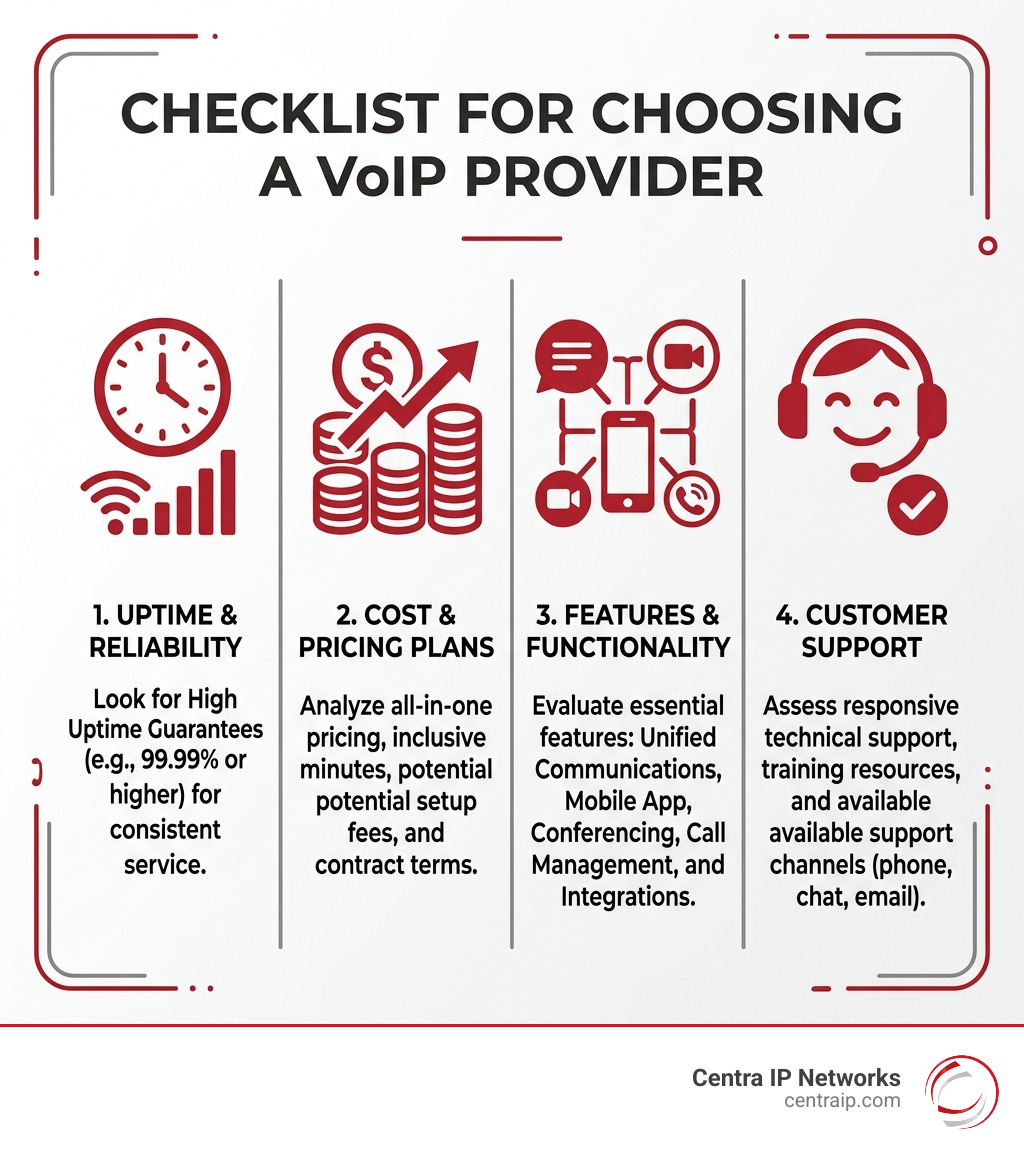
When you start shopping, you’ll find that a typical hosted VoIP phone system generally costs between $20 and $45 per user, per month. However, the “sticker price” isn’t the only thing to consider. You need to look at the total setup.
Hardware Requirements
You don’t necessarily need new phones, but they certainly help. You have three main options:
- IP Desk Phones: These look like traditional office phones but plug into your ethernet port.
- Softphones: This is just software on your computer or an app on your smartphone. No hardware is required!
- ATA Adapters: If you love your old analog phone, an Analog Telephone Adapter (ATA) can “bridge” it to the digital world.
The “Must-Haves” for Quality
To ensure your calls don’t sound like they’re coming from underwater, you need a solid foundation. This starts with a QoS (Quality of Service) Router. This piece of hardware tells your internet to prioritize voice traffic over, say, someone in the breakroom watching YouTube.
If you’re feeling overwhelmed by the technical specs, checking out a phone system buyers guide can help you list your specific needs before you talk to sales reps. You’ll also want to understand the difference between SIP trunks and SIP lines if you are planning on keeping an existing on-site server.
Frequently Asked Questions about VoIP
Can I keep my existing phone number when switching?
Yes! This process is called “number porting.” Under FCC rules, you have the right to keep your number when switching voip service providers. Most providers will handle the transfer for you for free. Leading providers now support number portability in over 100 countries, making it easier than ever for businesses with a business phone service in Dallas, TX to expand globally without changing their identity.
How reliable is VoIP call quality compared to traditional phones?
In 2026, VoIP actually often surpasses landline quality. Thanks to HD Voice technology, VoIP can carry twice the audio frequency of a standard phone call. As long as you have sufficient bandwidth and a jitter buffer (to handle minor internet hiccups), your calls will sound pristine. This reliability is why VoIP phone systems lead to strategic partnerships with IT vendors—businesses need an expert to ensure their network is optimized for voice.
Are there free or low-cost VoIP options available?
Absolutely. For the tech-savvy or those on a shoestring budget, providers like VoIP.ms and Callcentric offer pay-as-you-go models. You might pay as little as $1.10 per month for a number and a penny per minute for calls. These are excellent for setting up a digital fax service or a secondary business line without a long-term contract.
Conclusion
The landscape of voip service providers in 2026 is more diverse and powerful than ever. Whether you are a homeowner in Sarasota looking to save $40 a month or a growing enterprise in Tampa needing to unify 500 remote employees, there is a solution tailored for you.
At Centra IP Networks, we believe your communication system should be an asset, not a headache. We offer comprehensive Managed IT and Cloud Communications services across Dallas, Fort Worth, Orlando, Tampa, and beyond. Our unique approach provides all your services—phone, internet, and cloud—on one platform with a single bill.
By leveraging over 35 strategic partnerships, we don’t just sell you a “box” product; we build a customized cloud-based phone system that fits your specific workflow.
Ready to see how much you could save while upgrading your quality? Check out our guide on Centra IP Networks as your Business VoIP Service Provider or contact us today to start your transition to the cloud.